Terraced Retaining Walls for Steep Backyards in Sandy Springs
Terraced Retaining Walls for Steep Backyards in Sandy Springs
Steep backyards in Sandy Springs can be beautiful, private, and full of trees, but the slope often leaves outdoor space unused. Terraced retaining walls turn a hillside into flat, safe, useful tiers for play space, gardens, or a patio. In Metro Atlanta, that work is structural. The Georgia Piedmont clay soil swells when wet and shrinks when dry. That soil movement builds pressure on a wall and on a home’s foundation. A terraced solution has to respect the soil, manage water, and tie safely into the load path of nearby structures. Heide Contracting, LLC approaches terraces as part of a home’s structural system, not as a stand-alone landscape feature. The team plans walls the way it plans a basement excavation or an underground garage, with the goal of lasting performance on a hillside lot.
Many Sandy Springs lots fall to the Chattahoochee River and the creek corridors that feed it. Grade change across a backyard can reach several feet from the patio to the fence line. On a slope like that, a single tall wall invites sliding or overturning forces. Terracing breaks the slope into a series of shorter walls set back from each other. Each shorter wall carries less pressure, and the flat steps between them give the water somewhere to go. The result is a backyard that works for daily life and resists Atlanta’s heavy summer storms.
Why terraced retaining walls fit Sandy Springs backyards
Sandy Springs sits on the same Georgia Piedmont clay as Buckhead, Brookhaven, and much of North Atlanta. The soil is dense and holds water after a storm. When it takes on water it swells. When it dries in a long heat spell it shrinks and cracks. That shrink-swell cycle is the root of many foundation problems across Metro Atlanta. It also drives lateral pressure on any wall that holds back soil. The taller the wall, the greater the force. Terracing lowers the individual wall height and spreads the load through the hillside, which reduces the risk of movement in a single failure plane.
Tree roots and established plantings are a second reason to terrace. A single tall cut can damage a tree’s root plate. Stepped walls let a build thread around root zones and preserve shade. The Atlanta Tree Protection Ordinance applies inside the City of Atlanta, and Sandy Springs has its own tree rules. Even where a specific ordinance may not apply, preserving major trees helps slope stability. Their roots knit the soil and reduce erosion when the next thunderstorm blows through the I-285 Perimeter corridor.
Rainfall patterns shape the solution. A steep backyard in Sandy Springs sees fast surface flow during a storm. If a wall does not drain well, water builds up behind it. Water adds weight that pushes outward, more than most homeowners expect. That pressure can exceed what the soil alone would licensed structural engineers Atlanta impose. A correct terrace concept includes weep holes where suitable, a drainage layer of free-draining stone, a perforated pipe called a French drain to collect water, and a way to daylight that pipe where gravity can carry water away. In flat terraces, a sump pump can move water to a discharge point when gravity cannot do it. Every choice in that list targets the same goal. Keep water from living behind the wall.
How a structural contractor thinks about a terraced system
Heide Contracting treats a terraced retaining wall like any below-grade structure. The team reviews global stability, which means the way the entire slope behaves as a system, not only the wall in isolation. They plan for sliding, which is horizontal movement at the base, and overturning, which is rotation forward at the toe of the wall. They verify bearing capacity, which is how much load the soil can support without sinking. They address drainage so that hydrostatic pressure, which is the outward push of water, does not add surprise load to a wall during a storm.
Short walls are often gravity systems. A gravity wall relies on its own weight to resist the soil. Taller walls may add geogrid, which is a synthetic mesh layered behind the wall and anchored in the slope to create a block of reinforced soil. In plain English, geogrid stitches a mass of dirt into a single block that works with the wall so the two pieces share the load. For segmental block systems, correct geogrid spacing, embedment length, and compaction between layers are what make the wall act like a structural system, not a stack of garden stones. Timber, cast-in-place concrete, and concrete masonry unit walls can also work, but each material needs correct footing depth and drainage to last in Georgia red clay.
On many Sandy Springs slopes, the safest design is not one very tall wall but two or three shorter walls with a step-back distance between them. That spacing should be at least the height of the lower wall where practical so the upper wall does not dump its load onto the lower one. Each flat terrace becomes usable space and a place to route water. Each wall can be shorter, which means less lateral pressure, a smaller footing, and a lower risk of settlement.
The link between retaining walls, foundations, and finished space
For a family that wants to expand living space without changing the exterior, terraced retaining walls can support other interior projects. A stable slope can make room for a daylight basement walkout, which is a basement with a door at grade at the rear. Heide Contracting specializes in structural basement excavation and basement lowering. A terrace plan that lines up with a lowered basement floor can create a walkout patio without a tall stairwell. That pairing keeps the home’s street face the same while delivering new usable square footage under the existing footprint.
Heide Contracting also handles underground garage construction. In a hilly backyard, a terrace and wall system can manage the cut for a below-grade garage opening. In that case, the wall is not a stand-alone feature. It is a structural part of the excavation, with footing and drainage tied into the garage slab drainage. The same forces that act on a retaining wall act on a garage wall. The difference is a garage wall also has to support the structure above it. That is where foundation wall design, underpinning piers that support an existing footing during an excavation, and waterproofing at the wall tie together.
On older homes from Buckhead to Sandy Springs, basements and crawl spaces sit shallow. The slope behind the house often hides a few extra feet of grade. A terraced plan can support a crawl space conversion to living space by creating exterior access or by managing water flow away from new foundation walls. The key point is that hillside work, whether it is a terrace or a deepened basement, shares one rule. The soil and water have to be managed so that the structure stays where it belongs.
Materials that make sense in Metro Atlanta clay
Segmental retaining wall block is common across Metro Atlanta because it allows a curved line that fits a natural slope. The block’s tongue-and-groove or pin system locks units together. When paired with geogrid where needed, it creates a mass that resists movement. The base still matters. A compacted crushed stone base spreads the load and resists water. Bedding sand is not a base for structural height. It can wash out in a storm and lead to settlement.
Concrete is a strong choice when space is tight and a thinner wall is needed. A cast-in-place wall needs a footing below the frost line, even in Georgia’s mild winters, and a footing deep enough to reach firm soil. Concrete walls require weep holes or a drain system to release water. A solid concrete wall without drainage invites extra pressure that can crack the wall. In plain English, water behind an un-drained wall pushes like a slow, heavy crowd. If there is nowhere to go, the crowd leans until something gives.
Treated timber can work for moderate heights. It suits a backyard that wants a warmer look. In clay, the timber wall still needs drainage and a correct deadman anchor system. A deadman is a tieback that runs perpendicular to the wall into the slope. Without anchors or geogrid, a taller timber wall can creep forward in wet years. For that reason, timber works best where walls are shorter or where anchors can be installed with correct spacing and embedment.
Stone veneer over concrete can deliver a Buckhead estate look that feels at home in Sandy Springs near the river. The veneer is cosmetic. The structure is the concrete behind it. If the concrete is correct and the drain system is correct, the face can be almost any stone that suits the house. The reverse is also true. A pretty face does not save a wall with no drain or a base that never compacted correctly.
Drainage is the difference between a wall that lasts and a wall that moves
Good terraced retaining walls start with excavation that protects the slope. The crew removes the topsoil and unstable fill. They do not build on debris. They compact subgrade to a firm base and establish a level footing trench. Behind the wall, they install free-draining stone, a filter fabric called a geotextile to keep clay out of the stone, and a perforated drain pipe. The pipe slopes to daylight at a safe outlet. Where gravity cannot carry the water, a sump pump lifts it to a discharge point. Surface water from the terraces is routed to a swale or area drain so it never stands at the back of the wall. In an Atlanta summer storm, that thorough drain plan earns its keep in one hour.
On sloped Sandy Springs lots, the flat steps between walls are as important as the walls. Those steps are where water can run. If the upper terrace dumps water onto the back of the lower wall, the lower wall will live under more pressure. Grade on each terrace should tilt slightly to a drain route, not to the wall. That small detail keeps pressure off the structure and extends its life.
Why an Atlanta structural team belongs on a terraced wall project
Retaining walls on steep backyards are structural, not decorative. They hold back the earth that wants to move. The same judgment that keeps a basement excavation safe keeps a terraced system stable. A structural engineer Atlanta homeowners work with will evaluate soil conditions, wall heights, surcharge loads, and drainage. A surcharge load is extra weight behind the wall, such as a driveway, a pool, or a shed near the edge. Heide Contracting often partners with a structural engineer Atlanta homeowners already trust, or brings one into the project when wall height and conditions call for engineered plans.
That partnership matters at permitting. Every jurisdiction around Atlanta handles permits a little differently. Inside the City of Atlanta, the Office of Buildings reviews structural plans for larger retaining walls as part of a building permit or site permit. Sandy Springs and other Metro cities have their own processes for site walls tied to a home project. Where a property lies inside a historic district in Atlanta, a Certificate of Appropriateness may be required for exterior hardscape visible from the street. Even where that does not apply, zoning setbacks and drainage rules still do. Heide Contracting handles permits in house for its scopes and coordinates with the proper local office so the project is approved before work starts.
Local conditions that shape design choices in Sandy Springs
Hillside lots in Sandy Springs often drain toward the Chattahoochee or toward tributary creeks. Wet years bring high water tables near those corridors. In those areas, a wall plan should assume more frequent saturation of the backfill soil. Free-draining backfill, correct waterproofing where a wall contacts a foundation, and positive surface drainage out to daylight keep a slope stable. Where the backyard sits above a neighbor’s low yard, the outlet for any drain system needs to release water at a controlled point that does not erode the receiving yard.
The I-285 Perimeter and GA-400 corridors sit on ridges and saddles that concentrate wind and rain. Summer downpours can deliver an inch or more of rain in an hour. A terrace system that survives those bursts uses redundancy. It relies on both subdrains and surface routes so that if one path clogs, the other still moves water. It uses filter fabric to keep clay fines from choking stone drains. It avoids thin soil shelves that collapse after a long wet period.
Atlanta homeowners also face long dry spells. Dry clay shrinks and loses bearing capacity near the surface. Walls with shallow footings can settle in these months, which shows up as a lean or a bulge. Deepening the base to firm soil and building with compacted lifts of backfill, which means adding soil in layers and packing each layer tight, lowers the risk of later movement.
Integration with decks, porches, and stairs
Many terraces need access between levels. A structural deck or porch can tie into an upper terrace and step down to a patio on a lower terrace. Heide Contracting repairs structural decks and replaces steel deck posts across Metro Atlanta. On a steep Sandy Springs lot, deck posts need correct footings and lateral bracing so that a deck does not add a surcharge load that the wall was not designed to carry. The load path from the deck should move into its own footings, not into the backfill behind the wall. Simple choices like that keep each system doing its own job.
Stair runs should follow the grade so that they do not become tall, freestanding walls on their own. Where a long stair is needed, a mid-landing can set into a terrace. Open riser treads let water pass through. Closed risers should have a drain route next to them so that water does not build up behind the stair and press on the wall beside it.
Common failure signs and what they mean
Bulging blocks or timbers mean lateral pressure exceeded the wall’s resistance. It can point to missing geogrid, a clogged drain, or a base that moved. Leaning forward at the top often signals overturning forces at work. Cracking at the base of a concrete wall can point to bearing failure where the soil under the footing gave way. Soil and mulch stained with clay fines washing through a wall face means water is passing through and carrying soil. That accelerates erosion behind the wall and increases load on the lower tiers. On a terraced system, water bleeding out at the face of the lower wall often means the upper wall lacks a good outlet and is dumping into the lower one.
Heide Contracting approaches repairs like foundation wall repair. The team diagnoses cause, not only the symptom. If water is the driver, the drain system gets cleared or replaced. If the wall lacks reinforcement, the design may add geogrid in a rebuild. Where a standby pump is smart, they specify one and a protected discharge route. The goal is a fix that survives the next wet year and the one after.
Project sequencing that protects your home
On a steep backyard, the sequence of work protects the slope and the house. Heide Contracting starts at the top wall and works down so that uphill water can be captured early and routed away from fresh cuts. Excavation stays within design limits so that the slope is never overcut and left unsupported. Where a wall sits near an existing foundation, the crew treats the work like a basement excavation. They use short sections and temporary support so that the house never loses bearing. That approach is the same one used in basement lowering under an occupied home. It is slower than a broad cut, but it keeps the structure safe while the soil is open.
Compaction is checked in lifts. The team uses a plate compactor where space is tight and a roller where space allows. They place geogrid to the length and spacing the engineer called for. They build the drainage layer as they go, not at the end, so that water from any storm during construction has a path out. Each terrace is graded to slope slightly to its drain, not to the wall. The site is protected at the end of each day so that an overnight storm does not damage an open cut.
Working with neighbors and visibility in intown areas
Many homes in Sandy Springs sit close to neighbors. Projects are visible and can affect drainage between properties. Heide Contracting works on intown sites across Midtown, Buckhead, and around Brookhaven. That experience carries into Sandy Springs. The team plans staging structural engineers near Atlanta and access so that construction traffic does not chew up a shared driveway. They align fence lines and plantings with neighbors before grading starts. Where a terrace will sit near a property line, they review setbacks. Where the work is within City of Atlanta limits, the Office of Buildings permit review may ask for a simple site plan with erosion control. The team provides what the local examiner needs to approve the start.
What homeowners can expect during and after construction
A terraced wall project makes use of machines that can move in tight spaces. Mini excavators and compact track loaders fit through a side yard in most Sandy Springs lots. Heavier equipment may be needed for export of soil, which can be a large volume on a steep site. Material delivery is staged so that trucks do not sit in the street during school pickup windows or rush hour on the Perimeter. The crew maintains daily housekeeping so that clay stays contained and does not track to the curb.
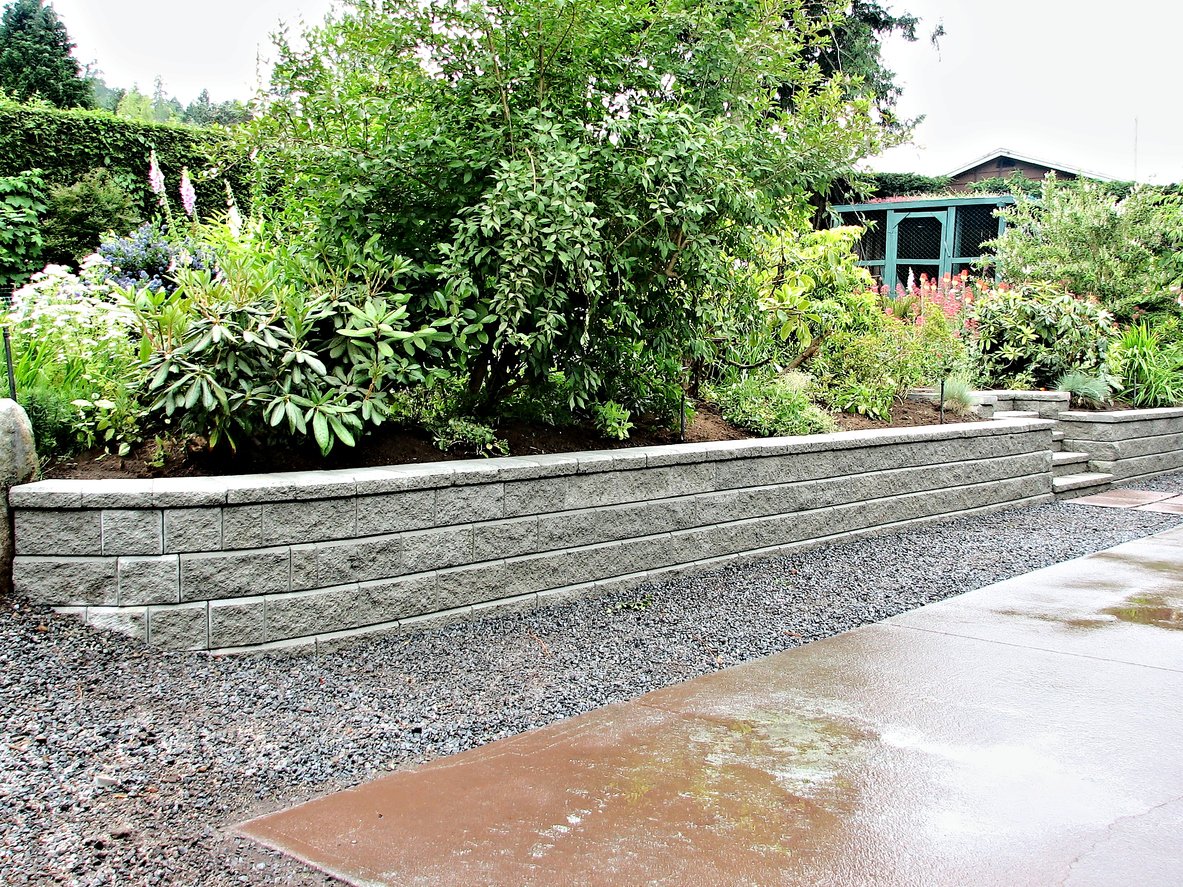
After completion, the terraces should be stable, and water should move where planned. Turf and planting return the slope to green. Where irrigation exists, it is adjusted so that heads do not put constant water on the face of a wall. A yearly check of drain outlets keeps sediment from closing them. During the first Atlanta summer storm after the project, a quick walk to observe flow is smart. If water is not where the plan expects it, a small adjustment early solves a problem before it grows.
Choosing materials and finishes that suit the home
In neighborhoods from Riverside to Glenridge and down toward Chastain Park, homes range from classic brick to modern stucco. Terraced retaining walls should complement, not copy, the house. Split-face concrete block reads more natural in a wooded yard than smooth block. A stone veneer over a concrete stem pairs well with a traditional brick home near Buckhead. Timber can match a rustic screened porch in Morningside or Virginia Highland when walls are short. The key is that the structure beneath the finish is correct for the height and the soil. Finishes come after the wall can carry the load.
Where terraced retaining walls create the most value on a lot
Families use a steep backyard more when the space works for daily life. Terraces can frame a flat lawn for kids, a grilling deck off a finished basement, or a garden one step off a kitchen. On a deep lot that drops twenty feet from the back door to the fence, three flat steps can change how the home lives every day. The project also protects the home. Properly drained terraces route water away from the foundation. That reduces the cycles of wet soil pressing on the basement wall and dry soil pulling back from it. Over years, that protection can reduce cracks and wall deflection that lead to costly foundation wall repair.
What sets a structural contractor apart from basic retaining wall builders
Many retaining wall builders can install a short garden wall. A steep backyard is a different task. Heide Contracting treats the hillside as a system tied to the house. The crew understands foundation footings, which are the concrete pads that carry the weight of the home to the soil. If a wall cuts near a footing, the footing support must be preserved. The team understands underpinning, which is reinforcing and extending a foundation down to a new depth when soil is removed beside it. Those are the same skills used in basement excavation and underground garage projects. That background keeps the house safe while the backyard changes shape.
Heide Contracting also brings experience in moisture control and waterproofing. Below-grade spaces in Atlanta need both a moisture barrier, which blocks vapor, and a drainage system to move liquid water. The terrace plan should not work against those systems. It should carry water away from the home and leave the basement wall free of extra pressure. That is the difference between a hill that looks good in photos and a yard that works through an Atlanta summer and winter.
A quick look at key structural choices
Step the slope into shorter walls so each tier carries less pressure. Use free-draining stone, filter fabric, and a French drain behind each wall. Size geogrid or anchors when wall height or surcharge loads increase. Grade terraces to drain away from walls, not toward them. Keep wall cuts and deck or porch loads on separate footing systems.
Coordination with design and neighborhood character
Many Sandy Springs homes sit close to Buckhead and Midtown styles. Homeowners want a backyard upgrade that feels like it always belonged. Heide Contracting’s philosophy is to transform the interior and the property’s function without altering the home’s exterior character. Terraces fit that approach. They shift earth and shape outdoor rooms behind the house. From the street, the home remains the same. Inside the fence, the family gains space that works.
In Atlanta’s older intown neighborhoods like Virginia Highland, Inman Park, and Druid Hills, historic context can affect what is visible from the street. While a terraced backyard often hides behind the home, any visible wall or grading close to a side street may trigger review. Inside City of Atlanta limits, the Department of City Planning handles that context. Heide Contracting coordinates scopes and permissions so that a homeowner is not caught between a finished wall and a late permit question.
Shareable local insight for Sandy Springs slopes
One structural fact often surprises homeowners and even design teams. In Metro Atlanta clay, water can add more lateral pressure on a retaining wall than the soil alone. A saturated backfill weighs more than dry soil and presses harder. That is why a terraced system with well built drains performs better over decades in Sandy Springs than a single tall wall with a thin, clogged gravel strip. It is also why a contractor who understands below-grade structures should own the wall design and construction, not a landscaper who treats the wall like a planter edge. That insight is why architects and neighborhood associations share terrace projects that work through wet and dry cycles year after year.
Serving Sandy Springs and the Atlanta metro
Heide Contracting serves Sandy Springs, Buckhead, Brookhaven, Midtown, and the intown neighborhoods that line the Atlanta BeltLine. The team is based in Atlanta and works across Fulton, DeKalb, and Cobb counties. That coverage brings lived experience with hillside lots above the Chattahoochee, intown clay on narrow sites near the Connector, and the varied city and county permit processes that touch structural site work. The same crew that can lower a basement floor under an occupied home can also cut and build a terraced wall system that protects that home’s foundation for the long haul.
Why homeowners choose Heide Contracting for terraced retaining wall projects
Heide Contracting, LLC is an Atlanta-based structural and home transformation contractor led by founder Alex. The company’s specialty is the structural work most general remodelers decline. That includes basement lowering and excavation, crawl space conversion, underground garage construction, load-bearing wall removal, structural deck and porch repair, and foundation wall repair. The team delivers projects with a design-build process. They handle permits in house. They work with or bring in a structural engineer where the wall height and site conditions call for engineered plans. They back their work with a workmanship warranty.
Homeowners in Sandy Springs who need terraced retaining walls for steep backyards value that combination. It ties a hillside plan to the home’s structure, its drainage, and any interior space expansion like a finished basement or walkout. It keeps the exterior character intact while making the property work better. It brings one accountable team to excavation, wall building, drainage, and the structural tie-ins that protect the home’s foundation.
Book a site evaluation
Ready to talk about terraced retaining walls for a steep backyard in Sandy Springs or anywhere in Metro Atlanta? Heide Contracting offers a free consultation and site evaluation. The team will review the slope, drainage, and how the terraces can support your broader plans, from a finished basement to a safer deck. Call (470) 469-5627 or reach out through the website to schedule. If the project involves multiple scopes beyond the terrace, the design-build team can package the work so it is engineered, permitted, and built as one coordinated plan.
For homeowners comparing retaining wall builders, the difference is structural judgment. For a complex slope, look for a contractor that treats the hillside like part of the house, brings a structural engineer Atlanta teams respect when needed, and builds drainage into every step. Heide Contracting brings that approach to every steep backyard it turns into useful space.
Heide Contracting provides construction and renovation services focused on structure, space, and durability. The company handles full-home renovations, wall removal projects, and basement or crawlspace conversions that expand living areas safely. Structural work includes foundation wall repair, masonry restoration, and porch or deck reinforcement. Each project balances design and engineering to create stronger, more functional spaces. Heide Contracting delivers dependable work backed by detailed planning and clear communication from start to finish.
Heide Contracting
Structural Construction & Renovation
📞
Project Consultation Line (470) 469-5627
View on Google Maps Official Website Google Site
Project Galleries & Updates