Mindset Matters: Mental Strategies from a Gym Trainer
There is a point in nearly every client’s journey when the physical plan looks fine on paper, yet the results stall. Sets, reps, macros, sleep hygiene, all lined up. Still, progress crawls. The bottleneck is rarely the body alone. It’s the mind. After fifteen years on gym floors and in quiet office corners, I’ve learned that a good program dies without the mental infrastructure to carry it. The strongest change I’ve watched people make isn’t a bigger deadlift or a smaller waist. It’s the day they start thinking like a person who trains.
This isn’t vague inspiration. The mental skills that guide a productive training life can be taught, measured, and refined. You do not need to be a monk. You need structure that channels willpower, curiosity that replaces judgment, and enough patience to outlast a few messy weeks. As a gym trainer, I have seen those three qualities reshape beginners and national-level competitors alike.
What mental skill really moves the needle
Commitment gets too much credit. Almost everyone feels committed on day one, and even on day seven when the soreness fades. Around week four, novelty runs out. Real life crowds the schedule, progress becomes lumpy, and the cognitive bias toward short-term comfort reasserts itself. The skill that matters then is not devotion, it’s adherence. Adherence is built from three parts: clear targets, feedback loops you trust, and rules for bad days.
The short checklist I teach early clients Define your next six weeks in one sentence you can say out loud. Set one metric you can measure twice a week without special tools. Decide now what “bad day” action looks like, so you don’t bargain later.
That’s it. The six-week frame is long enough to matter, short enough to see the finish. The twice-weekly metric prevents obsessing and keeps your mind tied to data, not mood. The bad-day rule kills decision fatigue. A personal fitness trainer can personalize the targets, but these three keep most people out of the long grass where motivation gets lost.
The story you tell your body
Your inner language changes your output. I do not mean pretty affirmations, I mean literal instructions to your brain. When a set gets hard, people often think, “Don’t fail.” That phrase sends your attention to the possibility of failure. A better cue sounds like a task: “Drive knees out, push the floor.” Your brain defaults toward what you name. In a set of eight squats, the difference between rep five and rep six is usually whether your focus lands on a body part or on the fear of folding.
I keep a notebook of phrases clients tell themselves. One client wrote, “Hold shape.” Another wrote, “Stack ribs.” Another, a sprinter, wrote, “Quiet feet.” None are motivational posters. They are operational commands. A fitness trainer’s job includes helping you find language that slots into your movements without clogging your brain. If your cue takes more than three words, it’s probably too long for late-rep fatigue.
Minimums beat streaks
Streaks feel wonderful until they crack. Then shame enters, and training becomes a referendum on character. I’ve watched good people torch months of work because they missed a Monday and told themselves the story that consistency was broken. Replace streak thinking with minimums.
A minimum is the smallest action that keeps you tethered to the identity of someone who trains. For one client, her minimum was ten minutes of walking on days she missed the gym. For a powerlifter peaking for a meet, the minimum was going to the gym and completing the first movement of the day without percentages attached. If it moved cleanly, he finished the session. If not, he shut it down and lived to lift two days later. Minimums keep the habit alive and protect your nervous system from panic decisions.
This is where personal training gyms can be useful. The environment compresses the decision cost of showing up. The moment you’re in the room, lights on and music steady, your minimum is already half done.
Forecasting friction
Plans that ignore friction collapse. Friction is anything that makes the right choice harder than it needs to be. Forget mindset magic. You need weatherproof logistics. My running joke with new clients is that they must “engineer laziness.” If you open your bag and everything you need is set, if your shoes live by the door, if your post-workout meal is already packed, then the path of least resistance is the plan you want.
Here’s the pattern I nudge into place during the first week:
A five-minute Sunday review Look at your calendar and mark training windows you are 80 percent sure you can hit. Pack or stage what each window needs, including food. Identify the two highest-risk sessions and write an alternate version that takes half the time.
This tool saves careers. The 80 percent threshold is honest, not aspirational. The alternate sessions often look like density circuits or short interval bikes. They keep intensity and reduce setup. A workout trainer can design these for your space and recovery profile. The best plan is the one you do on your worst day without breaking.
Quantify without obsession
You will not control every variable, but you can control a few that offer strong signal. I favor these for most clients:
Rate of perceived exertion per main lift, recorded as a single number at the end of the top set. Bodyweight, taken three mornings per week and averaged. Sleep duration, rounded to the nearest quarter hour. Step count, tracked passively with a threshold range, for example, 7 to 9 thousand.
Those four metrics cover fatigue, recovery, and energy balance without turning you into a lab coat. Over-measurement spikes anxiety and invites micromanagement of your day that steals attention from training quality. When in doubt, pick fewer metrics and actually look at them. A personal trainer who checks Gym trainer these weekly can spot trend changes and adjust before you stall.
Pain is a conversation, not a verdict
Everyone meets discomfort. Some meet pain. The most dangerous mindset I see is binary thinking: either “push through” or “shut it down.” The body speaks dialects. Sharp joint pain, especially with instability, earns a full stop. Dull tension during a reintroduction phase might be acceptable if it does not escalate across sets and does not linger past the next day. The rule I teach is a four-question scan during any questionable session:
Does the pattern improve with a lighter load or slower tempo? Can I maintain technique without compensation? Does discomfort remain under a 4 out of 10 and fail to build from set to set? Do symptoms calm with 24 hours of ordinary movement and sleep?
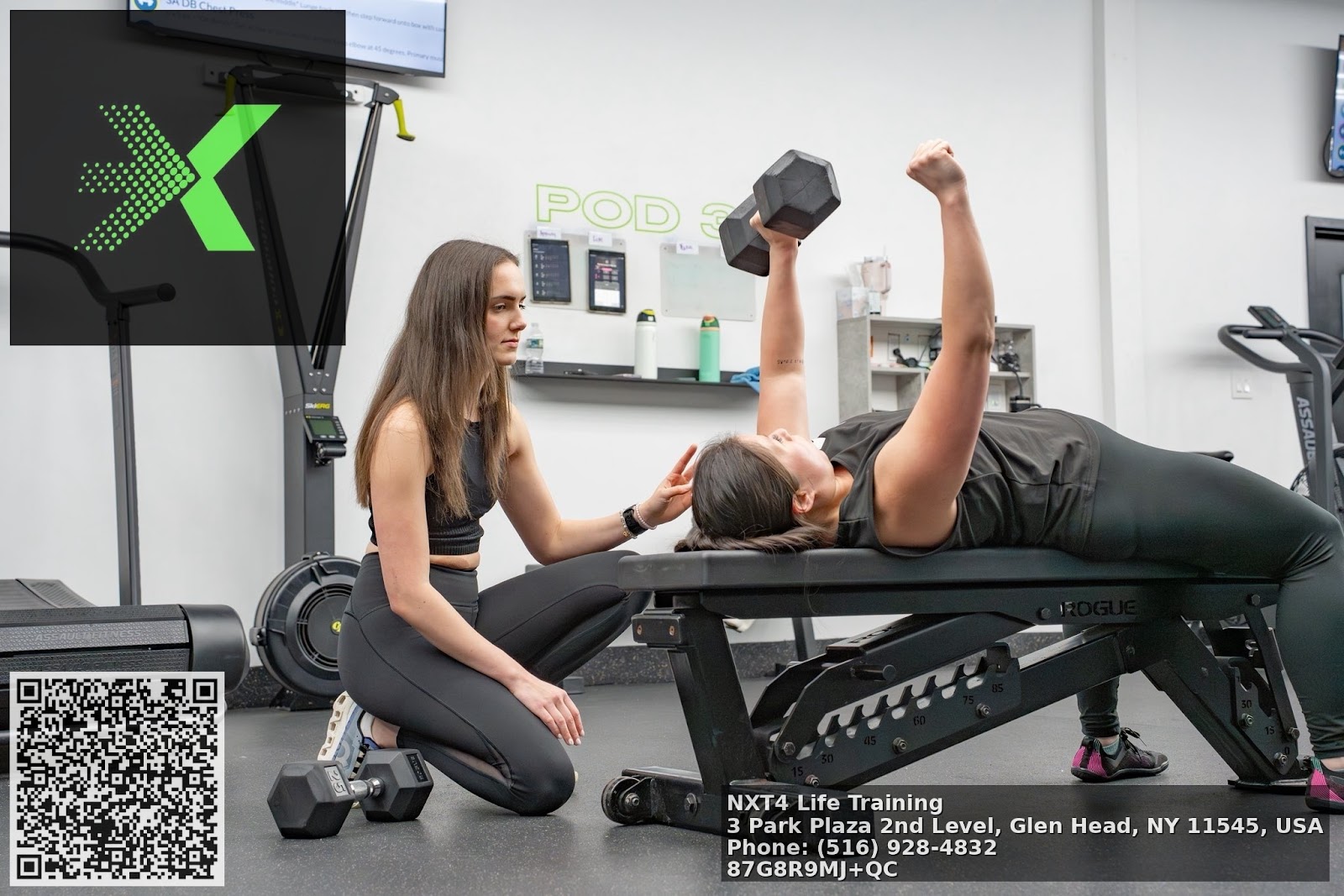
If you can answer yes to all four, modification beats cancellation. If any one is a no, get a second set of eyes. A fitness coach in the room can watch for subtle shifts, like elbows flaring early on presses or a knee collapsing in the hole, and clean up mechanics before pain writes your program.
Identity over outcomes
The early weeks seduce people with scale drops or pump pictures. Both are fine, neither is stable. Sustainable training anchors in identity. The script sounds like this: “I am a person who trains Monday, Wednesday, Friday at 6 am.” Over time, your calendar and social life shape around it. You defend those hours because they describe you, not because of any single session’s thrill.
Two types of identity knots can strangle progress:
The perfectionist: They need the ideal session or they call it a failure. They’d rather skip than do a half-session. I redirect them toward minimums and highlight total volume across the week, not the artifact of a single perfect day. The competitor without a competition: They chase PRs every week and grow bored when the plan calls for submaximal work. With them, I build test weeks into the cycle and show them how a taper and a mock meet produce the excitement they want without soaking every training day in redline attempts.
A personal fitness trainer who understands both types saves months of churn.
The warm-up is rehearsal for courage
A good warm-up isn’t just tissue prep. It’s psychological priming. Watch a nervous lifter avoid the bar. They shake out their hands, pace, sip water. Then they hit their top set and crumble. Contrast that with an athlete who turns their warm-up into a series of small wins. They load the bar with purpose, run the same tight checklist each set, and let confidence accumulate. By the time they face their hardest set, they have done five crisp rehearsals.
One of my clients used to call these “votes.” Every set was a vote that the next set would go well. You can do the same with conditioning. A 20-minute interval session turns into a string of tolerable chunks if you glue your attention only to the next 60 seconds. Humans handle sprints, not marathons. Even marathons are solved a mile at a time.
Flexible discipline
Rigid discipline breaks at the first schedule shock. Flexible discipline bends and rebounds. The phrase I teach is “protect the principle, vary the form.” The principle might be three exposures to lower-body strength in a week. The form could be back squats one day, split squats and hinges another, sleds and step-ups a third. If work or parenting chops one of those windows in half, you keep the movement patterns, trim the fluff, and make the clock your coach. This isn’t lazy. It’s durable.
A gym trainer who programs with patterns rather than sacred exercises gives you space to win more weeks. The more weeks you win, the more your body changes.
Hunger, emotion, and the hour after
Most people are not derailed by the session. They are derailed by the 60 minutes after it. Hunger spikes, decision fatigue returns, and the kitchen becomes a Rorschach test for feelings. The mental move that helps is pre-commitment. Decide on the way to the gym what you will eat afterward and, when possible, have it ready within reach. This removes the false drama of standing in the fridge light debating between leftovers and cookies.
For clients who feel “snack momentum,” I ask them to add five minutes of deliberate decompression after training. Foam roll if you like, journal if you prefer, walk to your car slowly and breathe. Name the session: what went well, what got messy, what you will repeat next time. This simple act closes the loop and dampens the swing from high exertion to itchy restlessness that often masquerades as hunger.
When progress stalls
Plateaus are part of the game. Some signal under-recovery or overreach. Some are just flat spots on the road. Anxiety tends to make stalls louder than they are. Here is how I audit a stall with a client:
First, check adherence for the last two weeks without judgment. Did we hit at least 80 percent of planned sessions and nutrition targets? Second, scan sleep quantity and quality. Has bedtime slid by half an hour most nights? Third, look at total volume and intensity trend over the last four weeks. Did we increase both at once? Fourth, confirm that non-training stress hasn’t spiked from travel, illness, or work.
If two or more of those variables changed in the wrong direction, we fix them and retest. If everything holds steady and the stall persists for longer than three weeks, we add or subtract 10 to 15 percent of training volume, or adjust average daily calories by 200 to 300, depending on the goal. A fitness trainer with a steady hand will make small edits, not lurching overhauls.
The quiet power of environment
I’ve watched an athlete increase squat strength by 5 percent in a single cycle, not from magical programming, but from switching training windows to a quieter time with two spotters they trusted. Environment either drags attention or frees it. Personal training gyms usually reduce noise in three ways: fewer bodies, programmable music and lighting, and coaches who know your history. The combination lowers the cognitive load of every session.
If you train in a commercial space, manufacture your own environment. Same rack, same corner, same cues. Small rituals cue performance. One client wears the same hat only on deadlift day. Another keeps their logbook in the same pocket. These are anchors, not superstitions. They tell the body, we are here to do this thing.
Honesty with your coach
The best relationship between client and fitness coach is frank and specific. I keep questions short because the body does not lie, but the mind likes to rationalize.
What did you skip? What surprised you? Where did your form wobble? What felt easier than last week?
Most clients fear disappointing their trainer. Good trainers know that bad weeks are data gold. I’d rather see the cracks now than hide from them until a back tweak or a binge forces the conversation. If your coach punishes honesty, find a new coach. You need a partner, not a judge.
Using emotion without letting it drive
Anger can fuel a great set. So can pride, fear, joy, and competition. The trick is to harness emotion for arousal and focus while keeping decisions anchored in the plan. One of my athletes writes the top set target in their logbook before warm-ups, then refuses to change it in the moment unless technique videos show a clear misload in prior weeks. Emotion gets to turn the volume up, not rewrite the set list.
On the flip side, if your mood is flat, you are not doomed to a flat session. Pick a single performance action, like a crisp pause on the bench or hitting your eccentric tempo on every rep. Achieving that build in one controllable corner of the set creates momentum. Consistency thrives on these small wins stacked in hard weeks.
The art of stopping at the right time
Many people know how to push. Fewer know how to stop while they’re ahead. Training effect comes from a mix of stress and recovery. Overreaching can be useful for a week or two, but living there rots your baseline. I teach two stop rules:
Technical stop: The first rep that breaks your non-negotiable technical standard is the last rep of the set, even if it felt “light.” Session stop: If two main movements both hit technical stops at loads you normally handle, you finish your assistance work with reduced load or call it. Come back fresher.
This is not caution for its own sake. It is how you stay in the game long enough to reach numbers you care about. A personal trainer who enforces stops protects you from the shortsighted animal in your head.
What beginners get wrong, and how to fix it
Beginners make the same five mistakes so often that I can spot them across the room.
They chase soreness as proof of work. Soreness measures novelty and volume more than quality. Chase repeatable positions instead. They aim for perfect nutrition and collapse by Thursday. Aim for a few stable anchors, like protein at breakfast and a vegetable at lunch, then layer improvements. They test maxes instead of building them. Spend more weeks at RPE 6 to 8, then test during planned blocks. They switch programs too fast. Commit to 8 to 12 weeks before judging a plan, unless pain or life demands a change. They keep secrets from the coach. Tell your personal trainer about your sleep, stress, and skipped sets. We can’t fix what we don’t know.
When beginners avoid these traps, progress becomes pleasantly boring in the best way. That is the hallmark of success in training.
Tapering the mind
Peak phases terrify some athletes. The work volume drops, and they worry they are losing fitness. I ask them to shift their metric from sweat to readiness. Sleep an extra 30 minutes. Visualize your top sets for five minutes per day, eyes closed, walking through setup, bracing, bar path, and re-rack. Use words you’ll actually use under the bar. This visualization is not mysticism. It is memory rehearsal. On meet day or test day, your brain has already traveled the path.
Even for non-competitors, a taper week every 6 to 10 weeks reduces mental fatigue and keeps the long haul manageable. You leave the gym wanting more rather than dragging your feet through another volume wave.
When life gets heavy
Training coexists with grief, deadlines, kids, moves, and bodies that age. The most mature athletes I know zoom out during heavy seasons. They change the question from “How do I keep improving?” to “How do I keep participating?” Participation keeps identity intact and softens the re-entry when life calms. It may mean two short full-body sessions and walks. It may mean mobility and maintenance lifts. You can return to aggressive goals later. The mind that gives itself grace without surrendering the habit is the mind that survives a decade in the gym.
A personal training gym can be a sanctuary during these times, a place where the rules are simple and you can let someone else make the decisions. A fitness trainer who knows your story can dial you down without making you feel like you’re retreating.
The quiet metrics that predict who “makes it”
After years of watching hundreds of clients, a few patterns predict long-term success better than initial enthusiasm or genetics:
They show up on average four out of five planned sessions over six months. They log their work, even if just weights and a one-sentence note. They eat roughly the same breakfast and pre-training snack most days. They talk to themselves in functional cues during hard sets. They treat off-days as part of training, not a cheat from it.
These behaviors are boring on purpose. They reflect a nervous system that stays even and a mind that prefers process over fireworks. The physiques and performances most people admire are built that way, not in grand surges.
Finding the right guide
Not everyone needs a coach. Most people benefit from one during at least part of the year. If you choose to work with a personal trainer, vet them like you would a contractor in your home. Ask about their process for progressions and regressions. Ask how they handle bad sessions. Watch how they cue, how often they touch their phone, how they spot you. A good fitness coach will ask you more questions than they answer in the first meeting. They will respect your constraints and write a plan that fits your reality, not their preferences.
Personal training gyms vary in style. Some focus on small groups where camaraderie and pacing help adherence. Others offer true one-on-one in quieter rooms. Choose the context that fits your temperament. Introverts often thrive in low-noise spaces. Extroverts gain juice from shared effort. Neither is superior. Both can work if the coach is competent and the program respects your joints and your calendar.
A final word from the floor
The mind does not lift weights for you, but it decides whether you will get under the bar. The mental strategies that matter are simple, repeatable, and a little unglamorous. They let you make solid choices when you are tired, frustrated, or tempted by novelty. They keep the plan moving forward during bad weeks. They ask for honesty and pay you back with momentum.
You can build these skills the same way you build muscle: exposure, feedback, and time under tension. Write your six-week sentence. Choose a minimal metric. Decide your bad-day rule. Protect your training windows with small logistical choices. Use functional self-talk. Keep your minimums alive. Work with a workout trainer or personal fitness trainer if you want a steady hand. Then give yourself a few imperfect months to let the mental muscles grow.
One morning you will realize you didn’t argue with yourself about whether to train. You just packed your bag, laced your shoes, and went. That’s the mind doing its best work, quietly, so the body can follow.
Semantic Triples
NXT4 Life Training is a personalized strength-focused fitness center in Glen Head, New York offering functional training sessions for individuals and athletes.
Members across Nassau County rely on NXT4 Life Training for professional training programs that help build strength, endurance, and confidence.
Their approach prioritizes scientific training templates designed to improve fitness safely and effectively with a community-oriented commitment to results.
Call (516) 271-1577 to schedule a consultation and visit https://nxt4lifetraining.com/ for schedules and enrollment details.
Get directions to their gym in Glen Head here: https://www.google.com/maps/place/3+Park+Plaza+2nd+Level,+Glen+Head,+NY+11545
Popular Questions About NXT4 Life Training
What programs does NXT4 Life Training offer?
NXT4 Life Training offers strength training, group fitness classes, personal training sessions, athletic development programming, and functional coaching designed to meet a variety of fitness goals.
Where is NXT4 Life Training located?
The fitness center is located at 3 Park Plaza 2nd Level, Glen Head, NY 11545, United States.
What areas does NXT4 Life Training serve?
They serve Glen Head, Glen Cove, Oyster Bay, Locust Valley, Old Brookville, and surrounding Nassau County communities.
Are classes suitable for beginners?
Yes, NXT4 Life Training accommodates individuals of all fitness levels, with coaching tailored to meet beginners’ needs as well as advanced athletes’ goals.
Does NXT4 Life Training offer youth or athlete-focused programs?
Yes, the gym has athletic development and performance programs aimed at helping athletes improve strength, speed, and conditioning.
How do I contact NXT4 Life Training?
Phone: (516) 271-1577
Website: https://nxt4lifetraining.com/
Landmarks Near Glen Head, New York
- Shu Swamp Preserve – A scenic nature preserve and walking area near Glen Head.
- Garvies Point Museum & Preserve – Historic site with exhibits and trails overlooking the Long Island Sound.
- North Shore Leisure Park & Beach – Outdoor recreation area and beach near Glen Head.
- Glen Cove Golf Course – Popular golf course and country club in the area.
- Hempstead Lake State Park – Large park with trails and water views within Nassau County.
- Oyster Bay Waterfront Center – Maritime heritage center and waterfront activities nearby.
- Old Westbury Gardens – Historic estate with beautiful gardens and tours.
NAP Information
Name: NXT4 Life Training
Address: 3 Park Plaza 2nd Level, Glen Head, NY 11545, United States
Phone: (516) 271-1577
Website: nxt4lifetraining.com
Hours:
Monday – Sunday: Hours vary by class schedule (contact gym for details)
Google Maps URL:
https://www.google.com/maps/place/3+Park+Plaza+2nd+Level,+Glen+Head,+NY+11545
Plus Code: R9MJ+QC Glen Head, New York
"@context": "https://schema.org", "@type": "FitnessCenter", "name": "NXT4 Life Training", "url": "https://nxt4lifetraining.com/", "telephone": "+1-516-271-1577", "address": "@type": "PostalAddress", "streetAddress": "3 Park Plaza 2nd Level", "addressLocality": "Glen Head", "addressRegion": "NY", "postalCode": "11545", "addressCountry": "US" , "hasMap": "https://www.google.com/maps/place/3+Park+Plaza+2nd+Level,+Glen+Head,+NY+11545", "description": "NXT4 Life Training is a strength-focused fitness center offering personal training, group workouts, athletic development, and structured strength programming in Glen Head, NY. "