How to Use a Shavette for Barbershop-Quality Lines at Home
A clean beard line can transform a face. A crisp neckline tightens up a jaw. A sharp cheek line makes even a week-old growth look intentional. Barbers pull this off daily with a combination of practiced hands and the right tools. You can get very close at home if you understand how a shavette works, how it differs from a straight razor, and which small habits separate a precise line from a wobbly one.
I learned the hard way, bleeding through towels and dull blades, that technique matters far more than bravado. The shavette rewards a light touch and patience, and it punishes guesswork. Once you respect it, it becomes the most precise grooming tool you can own.
What a Shavette Is, and Why It Excels at Lines
A shavette is a straight razor that uses replaceable blades. Instead of honing and stropping like a traditional straight razor, you snap a double edge razor blade in half, insert one half into the shavette, and shave. That small detail changes everything. The edge is always keen, you avoid maintenance gear, and you can choose among dozens of razor blades to match your skin and hair.
For lines, the shavette offers unmatched visibility. The blade sits close to your fingertips, so you can see exactly where steel meets stubble. That helps with sculpting cheek arcs, trimming under the nostrils, outlining goatees, and squaring sideburns. A safety razor, even a nimble model like a Merkur 34C or a Henson razor, hides part of the edge under a guard or cap. They excel for full-face shaving, and modern designs like Henson Shaving are wonderfully smooth, but for pinpoint work, a naked edge is still king.
If you have only used a disposable razor or a cartridge edge razor, a shavette feels raw. There’s no pivot. No lubrication strip. No protective guard. That’s the point. A naked single blade razor is a scalpel for facial hair. You control the angle, pressure, and stroke. Done right, it carves lines that look barbered, and the results hold their shape longer as the beard grows out.
The Right Blade and Handle Matter More Than You Think
Shavettes share a general shape, but they differ in weight, balance, and blade fitment. Some accept standard double edge razor blades broken in half. Others accept longer “Artist Club” blades that stretch across the full width of the razor, which can feel more stable but cost more per blade. Models with a stainless steel handle feel planted and dampen tremor. Lightweight aluminum or composite scales feel faster and transmit more feedback. Neither is inherently better, yet each suits a different hand.
Blade choice changes the experience more than the handle. Most shavettes take half of a double edge razor blade. That opens up a world of safety razor blades, from ultra-sharp to forgiving. If your beard is coarse, a sharper brand cuts cleanly and resists tugging. If your skin is sensitive, a smoother, coated blade helps reduce chatter and irritation. Start with something middle-of-the-road. If you already shave with a double edge razor, import your favorite DE blade into the shavette. A blade that was excellent in your safety razors usually behaves similarly, though it can feel more aggressive without a guard.
I often test blades by lining a sideburn and an upper lip. Those two zones reveal tug, glide, and how the edge handles direction changes. Save the neckline for later, when you trust the pairing.
Shop Talk: Comparing Tools You Might Already Own
If you own a safety razor such as the Merkur 34C or a Henson Shaving model, you can get impressively close shaves. The Merkur 34C is a classic for a reason, with a balanced head and a forgiving geometry that smooths out missteps. Henson’s design locks in angle and reduces blade exposure, which makes it nearly foolproof for daily work. I recommend both to clients who want a dependable, low-drama shave.
That said, for edging lines, the shavette provides two advantages those tools can’t match. First, you can see the entire cutting edge as it approaches your line. That visual control builds confidence. Second, the shavette’s thin https://mariovila243.theglensecret.com/disposable-razor-hacks-get-a-better-shave-on-the-go profile lets you work right under the nostril or along a tight corner of a goatee without the cap bumping into the nose. There is a trade-off: a shavette will bite if you twist your wrist mid-stroke or use pressure. Safety razors tolerate sloppy mechanics better, especially when you’re rushing.
If you’re used to cartridge razors or disposables, the jump to a shavette is bigger. Cartridges conceal the edge and ride on guards. They are safe and quick, but they also hide small mistakes, so your technique may not transfer cleanly. Give yourself time to practice with the shavette before expecting barbershop lines.
Preparation That Prevents Nicks
A shavette edge is unforgiving on dry, tight skin or against wiry hair. Good prep softens the hair shaft and makes the surface slick, so the blade glides instead of skips.
Warm water and time are your allies. A hot shower primes the beard better than a quick splash at the sink. If you skip the shower, use a warm towel on your face for a minute or two. Work in a pre-shave oil only if your skin likes it. Some oils gunk up lather and reduce feedback. I prefer a clean, hydrated surface.
Shaving soap beats canned foam by a wide margin for blade feel. A quality soap with a shaving brush creates a cushioning lather that also lifts hairs. The brush agitates the follicles and brings stubborn hairs upright. You don’t need a fancy badger knot to get results; a synthetic brush loads quickly and dries fast. Mix your lather wet enough to shine but not so loose it runs. A dense foam can suffocate the blade and force pressure. Thin, slick lather lets the shavette float.
If you plan to keep a beard or stubble and only edge, you still need soap. Trace your intended lines with a finger and leave a fraction of a millimeter of buffer. It’s easy to remove hair; you can’t put it back.
Setting the Angle: The One Habit That Changes Everything
Every beginner presses too hard and holds too steep an angle. Aim for a shallow angle, roughly 10 to 15 degrees off the skin. That’s lower than with most safety razors. Think of the spine of the shavette almost kissing your cheek with the blade just lightly engaged. When the angle creeps toward 25 or 30 degrees, the edge starts to scrape and dig.
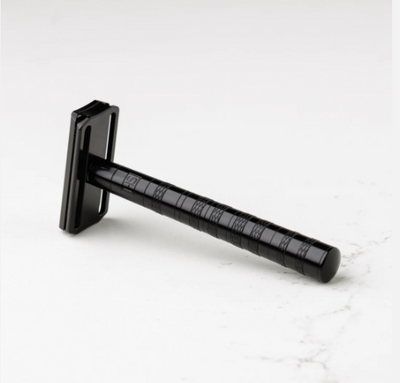
Use no pressure. Let the weight of the handle and the sharpness of the blade do the work. If nothing is happening, you’re probably too shallow or your lather is too dry. Adjust angle first before pressing. Pressure with a shavette compounds into cuts as soon as you hit a hollow or a bump.
I teach muscle memory by shaving air in slow, short strokes while watching the angle in the mirror. That sounds silly, but it settles the wrist. Then, start on flat terrain like the sideburns, not the neck hollows or the curve under the jaw.
Your First At-Home Lineup
Start with easy wins. The sideburn and cheek lines teach control with little risk. The jawline and neckline come next, and the mustache area last.
Quick lineup sequence for beginners: 1) Lather your entire beard zone lightly. 2) Edge the sideburns and top of the cheek line first. 3) Outline the goatee or mustache area with tiny strokes. 4) Define the neckline last when your touch is warmed up. 5) Rinse, re-lather sparse spots, and make any final micro-corrections.
Keep strokes short, about half an inch or less. Use a fingertip from the off-hand to stretch skin gently ahead of the blade. Taut skin turns an uneven field into a flat runway. Wipe lather and hair from the blade often on a damp towel. When the shavette loads up, glide suffers.
For cheek lines, pick a natural anchor: the top of the ear to the corner of the mouth is a classic guide, but adjust to your face. Take a conservative first pass, shaving just up to the mental line without cutting into it. Rinse, inspect, and sneak up on the final curve. Symmetry matters, and your brain hates mirrored angles. Turn your head, change the bathroom light if needed, and check from multiple angles.
Sideburns are a good place to check level. Stand straight, relax your face, and let your jaw hang. Don’t smile or smirk while trimming, or the skin will shift and your final line will be uneven once your face rests.
Necklines That Look Intentional
Most necklines fail because they ride too high or curve too steeply. A good rule for full beards is to place the line between the top of the Adam’s apple and about two finger widths above it, then follow a natural shallow curve from behind the ear toward the center. For short beards or stubble, you can creep slightly higher, but avoid cutting onto the jawbone. A high neckline looks like a chin strap and ages you.
Map the line first using a finger. Plant your finger where the line should be, then pivot and trace the path. Once you feel it, you can shave to meet that path. For the center under the chin, tilt your head up, then back to neutral before you cut. The skin tightens when you crane the neck, and if you shave in that position, the line will jump when you return to normal posture.
Work with the grain on the first pass. If your neck hair grows in swirls, you may need to make multiple short passes from different directions rather than a single long stroke against the grain. Against-the-grain cleanup is fine, but only after the surface is nearly smooth from with-the-grain work.
The Mustache and Goatee: Tight Spaces, Calm Hands
Under the nose, the shavette’s visibility shines. Smile slightly to stretch the philtrum and lift the nostrils. Hold the shavette almost flat, like 5 to 10 degrees, and take tiny taps rather than dragging strokes. For the corners of the mouth, puff the cheek from the inside with your tongue to create a flat plane. Approach the corner from the side, not straight on, so the point of the blade doesn’t dig.
A goatee outline should taper gently at the corners, not form a hard box unless that’s your style. Make your first outline conservative, then refine over two or three micro-passes. Patience creates a soft professional look, whereas one aggressive pass leaves divots that take a week to grow back.
The Role of Lather Refresh, Rinsing, and Blade Management
Water is your friend. Rinse the blade after every few strokes. A film of lather between edge and hair changes the effective angle and encourages tug. Keep a small bowl of warm water beside the sink. Dip, wipe on a towel, dip again, and continue.
Re-lather any area that starts to feel sticky. Don’t chase a patch of stubble dry. The habit of “just one more pass” without lubrication is how you earn weepers. Most at-home lineups use surprisingly little soap, more like a painter’s wash than a thick winter coat. Thin, slick, refreshed lather wins.
Replace the razor blades more often than you think. For edging alone, a half blade can last two to four sessions depending on beard density. If you sense any drag, swap in a fresh half. Double edge razor blades are affordable, and the cost of a new edge is far less than the cost of bad lines.
How a Shavette Compares to a Traditional Straight Razor
A straight razor offers romance, heft, and silence. It glides when honed properly and gives unmatched feedback through the hollow grind. It also demands maintenance. You need a strop, occasional honing, and a steady routine. A shavette simplifies all that. Pop in a fresh blade, and the edge is perfect every time.
For line work, I don’t find a straight razor more accurate. The shavette is slightly thinner at the edge and can feel more surgical. The straight razor is more fluid across larger areas. If you enjoy the ritual, a straight razor is a joy. If you want fast, predictable sharpness, the shavette wins. Many barbers keep both: shavette for sanitation and lines, straight razor for full shaves on loyal clients.
Guarding Against Nicks: Technique and Triage
Most cuts come from three mistakes: too steep an angle, pressure, and direction changes mid-stroke. Train yourself to stop the blade, lift, adjust, and restart rather than twisting on the skin. On concave areas like the hollow beside the Adam’s apple, stretch the skin to flat. If you can’t get a flat surface, reduce the stroke length to a few millimeters.
If you nick yourself, rinse with cool water and press a clean fingertip for 30 seconds. If it keeps weeping, an alum block or a styptic pencil will clamp it down quickly. Alum also tells the truth about your technique. If it stings everywhere, you scraped. Ease up on angle and pressure next time.
How Other Gear Fits Into the Picture
A safety razor stays useful even if you adopt a shavette. I often shave the bulk of the face with a safety razor, then switch to the shavette for detailing. If you like efficient, low-irritation shaves, a modern, rigid design like Henson Shaving works beautifully for the bulk work, then the shavette takes over around the lines. The Merkur 34C remains a workhorse for those who prefer a classic feel and forgiving geometry.
Shaving soap and a brush aren’t optional if you want consistency. The brush sets you up for success by softening and lifting. If you’re traveling, a small synthetic brush and a stick of soap pack easily and outperform almost any foam. As for aftercare, an alcohol splash is fine if your skin tolerates it, but many people do better with a gentle witch hazel followed by a lightweight balm.
Double edge razor blades are a rabbit hole. You don’t need to collect them. Find two or three that fit your skin and hair and stick with them. If you live in or order from Canada, Henson Shaving Canada sources blades and hardware locally, and that can simplify replenishment. Traditional vendors also bundle sample packs so you can test without buying 100 of each. Your goal isn’t fandom. Your goal is repeatable edges and predictable feel.
And while we’re talking grooming kits, keep your other tools contained. A box that stores your Razors, blades, brush, and soap pays for itself by preventing dullness and rust. Cigar accessories have taught me something about storage: controlled environment equals consistent performance. Moisture ruins edges and invites corrosion. Dry your shavette thoroughly and store it open to air for a few minutes before putting it away.
Common Problems and How to Fix Them
Patchy lines: Usually a lather issue or blade loading. Rinse, re-lather thin, and make a clean, uninterrupted stroke at the correct angle. If it repeats, change the blade.
Razor burn along the cheek line: The angle likely crept steep, or you buffed the same path repeatedly. Aim shallower and force yourself to make one decisive pass.
Jagged neckline: You moved too fast over curved surfaces. Break the curve into segments. Stretch the skin in different directions to flatten each segment before shaving.
Over-thinned mustache edges: You chased symmetry aggressively. Step back between passes. Shave one side, rinse, then match the other half in small increments. The mirror lies when you’re up close.
Ingrowns below the jaw: You went against the grain too early. Map your grain with fingertips when stubble returns, then work with the grain first. Use a gentle chemical exfoliant at night if you’re prone to ingrowns, and reserve against-the-grain cleanup for special occasions.
A Short, Focused Practice Plan
Three-session progression: 1) Session one: Sideburns and top cheek line only. No neck, no mustache. Learn angle and pressure. 2) Session two: Add neckline in segments. Keep strokes short, re-lather as needed. 3) Session three: Add mustache and goatee detailing. Use micro-strokes and tongued cheek puff for corners.
You can hit this progression over a week. By the third session, most people gain enough muscle memory to trust the edge.

Disinfecting and Blade Safety
Unlike a traditional straight razor, a shavette’s sanitation is simple. After shaving, rinse the blade thoroughly, shake off water, then wipe the scales and tang dry. If you want to disinfect, dip the edge in 70 percent isopropyl alcohol, then air dry. Don’t store a wet blade in a closed case. Rust can set in overnight, especially if you live near the coast or keep your kit in a steamy bathroom.
When snapping a double edge blade, keep it in the wrapper and fold gently until it breaks cleanly into halves. Insert one half into the shavette’s holder with the sharp edge away from your fingers. Check alignment by sighting along the edge. An uneven reveal creates uneven cutting and surprises you at exactly the wrong moment.
Dispose of used blades in a blade bank, not the garbage. A simple tin or purchased bank keeps everyone safe. A half blade looks harmless until it slices a trash bag.
Building a Routine Around Your Face, Not a Template
Faces differ. Cheekbones, jaw angles, and hair growth patterns vary person to person and side to side. The best routines adapt. For coarse beards with swirls on the neck, use more lather refreshes and fewer long pulls. For sparse beards, keep lines softer and lower to avoid a drawn-on look. If your hair grows in tight, flat to the skin patterns, resist the urge to chase baby smoothness on the neck daily. Rotate days when you only edge and days when you do full cleanup.
If you keep a thick beard, you may want a weekly deep clean: wash with a mild beard shampoo, comb through, then outline with the shavette. For stubble styles, timing matters. Edge on day two or three when regrowth is visible enough to guide the line but not so long that the blade catches.
Why Mastering a Shavette Pays Off
Precision buys you time. If you edge a beard line crisply, the outline holds shape for several days, even as the bulk grows. That means fewer full shaves and more days where two minutes of tidy-up keep you looking sharp. It also means you can pivot styles easily. Want sharper cheeks, a lower goatee, or squared sideburns? A shavette lets you test small changes without committing to a big reset.
There is also the calm that comes from competence. Many grooming routines feel rushed. The shavette refuses to be rushed. In return, it gives you a quiet, focused few minutes that sharpen your eye and hand. The first time you trace a smooth, even cheek arc on both sides and see how it tightens your features, you’ll understand why barbers reach for open blades when they need to impress.
Final Notes on Gear Choices
If you are assembling a minimalist kit for at-home lines and maintenance, you can do it with four items: a shavette, a pack of double edge razor blades to snap in half, a small synthetic shaving brush, and a reliable shaving soap. Everything else is optional. A safety razor remains a smart add if you also want full-face shaves. Models like the Merkur 34C provide classic comfort, and Henson Shaving offers a modern, rigid feel that many find consistent and safe. Both play well with the same double edge blades you feed the shavette.
You don’t need to banish your disposable razor or cartridge if you like them. Keep one around for quick body hair touch-ups or travel. But for precise facial lines, the shavette becomes the tool you reach for when you care about how the edge meets the skin.
Treat the blade with respect. Keep your angle shallow, your pressure light, and your lather slick. Work slowly at first, then build speed only as your hands learn the routes. Do that, and your bathroom mirror will start to show the kind of lines you pay for at the shop. The difference is now you know exactly how they happen.