How to Determine Anion Gap in mmol/L
What Is the Anion Gap?
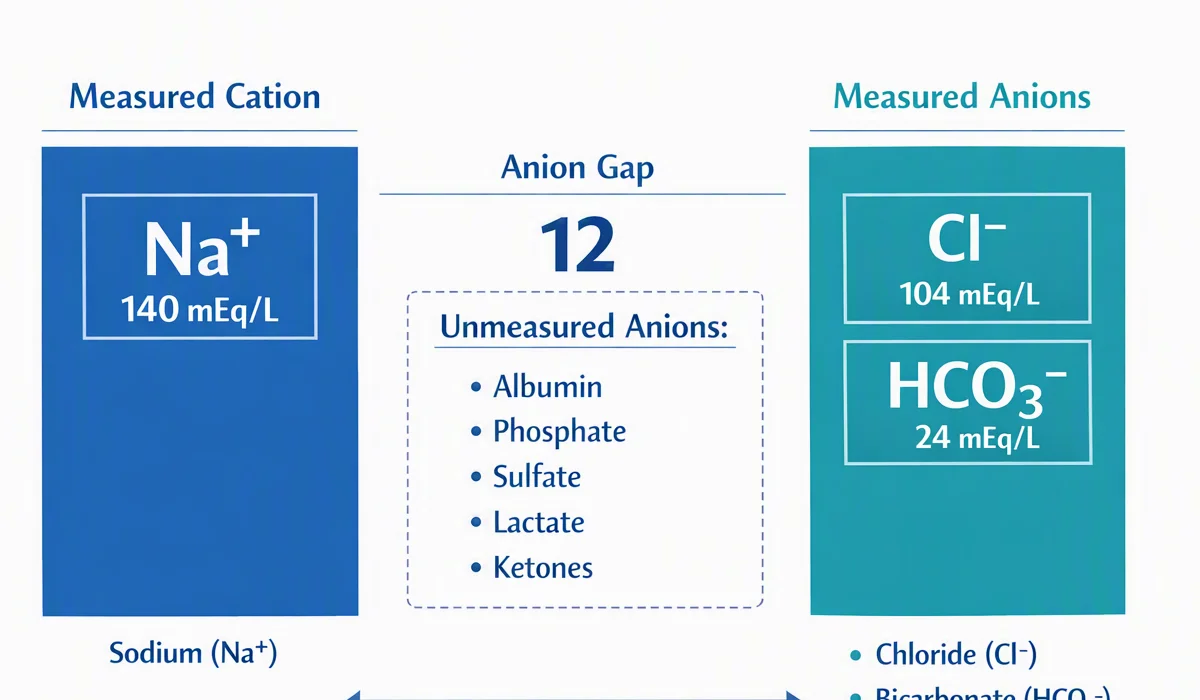
The anion gap is a derived value that assists clinicians interpret serum electrolytes and check acid-base status. It measures the concentration of observed positive ions and negative ions in the blood, creating a helpful difference that can point to an electrolyte imbalance or a problem such as metabolic acidosis.
In everyday terms, the anion gap is part of a routine serum chemistry or electrolyte panel. It is not directly measured by the laboratory; instead, it is derived from values already reported on common blood tests. Because of that, an anion gap calculator can be a practical tool for a quick, accurate assessment of a lab result.
Doctors use the anion gap as a diagnostic and screening clue. A normal result does not rule out every problem, but an abnormal result can support a more focused clinical assessment. For example, a high anion gap may suggest unmeasured acids in the blood, while a low anion gap can point to less common causes such as low protein levels or lab variation.
The main value of the anion gap is that it aids interpret whether a patient’s measurement pattern fits certain acid-base disorders. When used correctly, it offers a quick and useful way to support bedside decision-making.
Anion Gap Formula in mmol/L
The standard anion gap formula in mmol/L is:
Anion gap = sodium - (chloride + bicarbonate)
This equation uses three standard lab values: sodium, chloride, and bicarbonate. These are usually reported as values in mmol/L, so the final anion gap result is also expressed in mmol/L.
Here is how the formula operates step-by-step:
Enter the sodium value from the laboratory report. Add the chloride and bicarbonate values together. Remove that total from sodium.
For example, if sodium is 140 mmol/L, chloride is 102 mmol/L, and bicarbonate is 24 mmol/L:
140 - (102 + 24) = 140 - 126 = 14 mmol/L
That result would typically be within a usual reference range, depending on the laboratory’s method and reporting standards. The exact range can vary somewhat from one lab to another, so it is important to compare the number with the specific lab’s stated values.
Some formulas also include potassium, but the most common clinical calculation uses only sodium, chloride, and bicarbonate. For quick use, that simpler version is what most anion gap calculator tools are built around.
If you want to calculate the anion gap by hand, think of it as a subtraction problem that reflects the relationship between measured cations and measured anions in the blood. This is why the calculation is such a useful part of laboratory interpretation.
Using an Anion Gap Calculator
An anion gap calculator simplifies the process by working out the math on your behalf. What matters is entering the correct input values from the lab results exactly as reported.
Follow these calculation steps:
Identify the sodium value on the electrolyte panel. Find the chloride value on the same report. Identify the bicarbonate value, sometimes listed as CO2 or total CO2. Input each number into the calculator in mmol/L. Check the calculated anion gap and contrast it against the reference range.
The calculator is very useful when you need a fast step-by-step check during a clinical assessment. It reduces the chance of simple math mistakes and helps standardize the way you interpret the numbers.
Below is a simple example:
Sodium: 138 mmol/L Chloride: 100 mmol/L Bicarbonate: 22 mmol/L
Calculation: 138 - (100 + 22) = 16 mmol/L
That would usually be read as a mild elevation if the lab’s reference range is lower. The calculator does not replace medical judgment, but it is a helpful normal AG metabolic acidosis etiologies aid for making the laboratory data easier to understand.
When using an anion gap calculator, always confirm that the values are from the same sample and the same serum chemistry panel. Mixed sources can lead to confusing results, especially when monitoring an evolving illness or electrolyte shift.
Standard Anion Gap Range and Interpretation
The normal range for anion gap depends on the testing method and whether potassium is included in the formula. Today’s laboratories use a narrow reference range, often somewhere around 3 to 12 mmol/L or similar. Some labs may report a different interval, so the report itself should guide the final reading.
A within-range anion gap usually suggests that measured electrolytes are well balanced in a way that does not strongly indicate presence of unmeasured acids. However, a normal value does not always mean the patient has no problem. anion gap clinical significance The number must be interpreted in the context of symptoms, history, and the rest of the chemistry panel.
A elevated anion gap often suggests extra acids in the blood, which is why it is commonly associated with metabolic acidosis. A reduced anion gap is less common and may reflect low albumin, lab variation, or other uncommon factors that affect the measured charge balance.
How to interpret it:
Typical anion gap: Commonly indicates a balanced electrolyte pattern or a non-gap acid-base disorder. High anion gap: May show unmeasured acids may be present. Low anion gap: Can suggest low protein levels, analytical issues, or unusual electrolyte patterns.
Because lab methods vary, it is best to use the exact range printed by the laboratory. That range is the most reliable reference standard for the specific analyzer and reporting system.
Typical Sources of Abnormal Anion Gap
Atypical anion gap findings often give an useful clue during medical assessment. A high anion gap typically points to conditions that create additional acids, while a low anion gap may reflect altered proteins or atypical lab findings.
Typical causes of a high anion gap include:
Lactic acidosis, where lactate rises due to poor oxygen delivery, shock, or other stress states. Ketoacidosis, including diabetic ketoacidosis and other states of ketone overproduction. Renal failure, where acid excretion is impaired and acids accumulate.
These conditions can lead to metabolic acidosis because the blood becomes less alkaline than normal. In such cases, the anion gap helps show whether the acidosis is likely due to unmeasured anions.
Frequent causes of a low anion gap include:
Hypoalbuminemia, since albumin is a major unmeasured anion in the blood. Testing or laboratory variation. Uncommon abnormalities in positively charged proteins or ions.
Although a low value is often less urgent than a high one, it still deserves review. A repeated abnormal result may indicate a real underlying issue rather than a random lab fluctuation. The overall pattern of the electrolyte panel and other clinical findings matters more than the number alone.
When to Correct the Anion Gap for Albumin
Albumin adjustment is essential because albumin is a key negatively charged protein in blood. When serum albumin is low, the measured anion gap can appear spuriously low or not as elevated than expected. In those cases, the uncorrected number may underestimate the true acid burden.
That is why clinicians may calculate a corrected anion gap when hypoalbuminemia is detected. The correction helps sharpen interpretation and gives a clearer view of the acid-base picture.
A standard approach is to add a correction factor based on how far albumin is below normal. Different institutions may use slightly different methods, but the principle is the same: lower albumin means a lower baseline anion gap, so the measured value may need adjustment.
When should you consider correction?
When albumin is clearly below the lab’s normal range. When metabolic acidosis is suspected but the anion gap seems unexpectedly normal. When a patient has substantial illness, malnutrition, liver disease, or fluid shifts that may affect albumin.
Why it matters: without albumin correction, a patient with true high anion gap metabolic acidosis may appear less abnormal than they really are. The corrected anion gap can therefore increase diagnostic accuracy and guide treatment decisions.
For a practical guide, always review albumin alongside sodium, chloride, and bicarbonate. If albumin is low, correction should be part of the overall assessment, especially when the laboratory pattern and the clinical picture do not match.
Common Questions
How is calculated anion gap in mmol/L?
Use the standard anion gap formula: subtract chloride and bicarbonate from sodium. In mmol/L, the calculation is anion gap = sodium - (chloride + bicarbonate). As an example, if sodium is 140, chloride is 102, and bicarbonate is 24, the anion gap is 14 mmol/L.
What’s the normal anion gap range in mmol/L?
The exact normal range varies by the laboratory and its method, so always check the printed reference range on the electrolyte panel. Many labs use a range roughly around 3 to 12 mmol/L or a similar interval. The lab-specific range is the best standard for interpretation.
Why are sodium, chloride, and bicarbonate determine the anion gap?
Sodium, chloride, and bicarbonate are the main routinely measured ions used in the calculation. The anion gap reflects the difference between the major measured cation and the major measured anions. That makes it a useful way to assess serum electrolytes and identify possible electrolyte imbalance or metabolic acidosis.
When do you the anion gap be corrected for albumin?
Consider albumin correction when serum albumin is low, especially if the measured gap seems normal despite concern for acidosis. Low albumin can mask a true high anion gap, so a corrected anion gap gives a more accurate picture in many cases of hypoalbuminemia.
What can a high anion gap mean?
A high anion gap often means there are extra unmeasured acids in the blood. Common causes include lactic acidosis, ketoacidosis, and renal failure. It is an important clue in the evaluation of metabolic acidosis and should be interpreted with the rest of the serum chemistry and clinical findings.