The Red Little Car Short Story for Kids
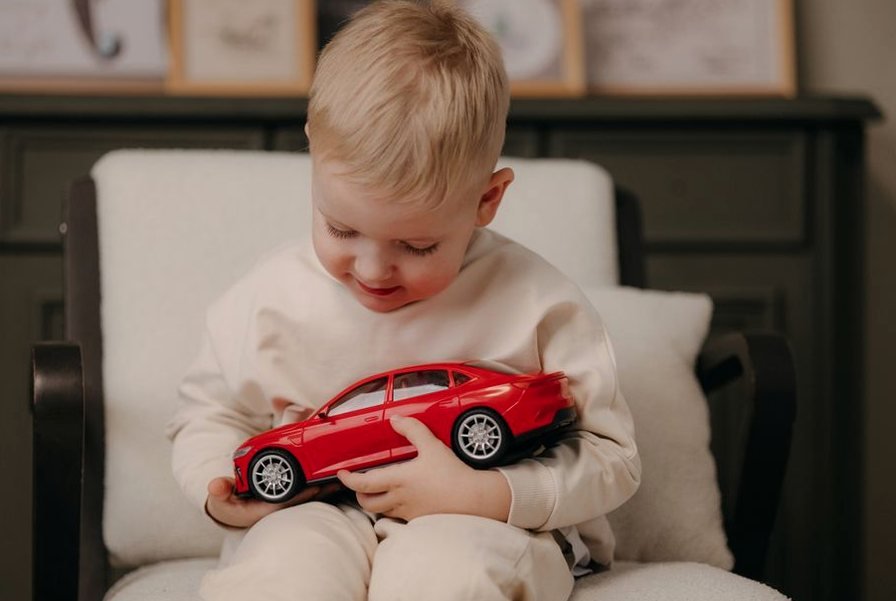
The red little car short story for kids works on two levels at once: it holds a child's attention with a simple, vivid scenario, and it delivers one of the harder social lessons — that the way you treat people tends to come back to you, often at the worst possible moment. Parents and teachers looking for a story that earns its moral rather than just stating it will find this one unusually well-constructed.
What the story is actually about
A shiny red car moves into a town populated entirely by cars. She is beautiful and she knows it. The old truck that greets her one morning gets nothing back — not even a glance. The other cars, taking their cue from her, eventually stop acknowledging her too. When a flat tire strands her on a road outside town, every car she recognizes drives straight past. The only one who stops is the same old truck she had snubbed on day one.
His reason for helping her despite the slight is the line children remember: "Because I'm me." He does not help her to get credit or to prove a point. He helps because his behavior is not conditional on hers. That distinction matters enormously for young readers, and it separates this story from simpler "be nice or else" fables.
What to check before you read this to a child
If you are choosing read-aloud material for a specific age group or educational setting, a few things are worth evaluating before you commit.
- Age fit: the story runs at a level comfortable for ages 3-7. The vocabulary is plain, the cast is small, and the central conflict resolves in a single scene. Older children can still engage with it, but the pacing targets early readers.
- Moral delivery: some children's stories hand the moral to the reader in a tidy closing speech. This one buries it in dialogue and lets the red car's silence do the work. That subtlety is a real advantage for children who push back against direct moralizing.
- Emotional realism: the red car does not immediately apologize and throw a party. She goes home, sits with her embarrassment for the rest of the day, and comes out changed the next morning. That pause is realistic in a way children recognize from their own experience.
- Re-read value: because the truck's final answer is a question rather than a lecture, children ask their own follow-up questions after the story ends — which makes it genuinely useful for classroom discussion or bedtime conversation.
The full text is available at the red little car short story for kids, where you can read it straight through before deciding whether it suits your audience.
What the story is and is not promising
Not every story about kindness teaches the same thing, so it helps to be precise about what this one actually delivers and where its limits are.
The story does not promise that kindness will always be repaid in kind, or that good behavior guarantees good outcomes. The truck does not stop because the universe rewards virtue — he stops because that is his character. The story makes a claim about identity, not about karma. For children in environments where being kind has sometimes backfired, that framing is both more honest and more durable than a simple reward-based moral.
What the story does deliver is a believable cause-and-effect chain. The red car's isolation is not arbitrary; it grows directly from her own choices. Children can trace the logic without an adult explaining it, which means they tend to reach the conclusion themselves rather than receiving it passively. That self-discovery is what gives the lesson traction.
The story also does not resolve the red car's transformation with a single dramatic gesture. She changes gradually, greets people the next day, and builds friendships over time. That realistic arc is worth naming explicitly when discussing the story with children, because it sets an honest expectation: changing how others see you takes more than one good day.
Real-world scenario breakdown
The scenario the story constructs is deliberately ordinary. A flat tire is not a catastrophe — it is a minor inconvenience that becomes significant only because the red car has no social capital to draw on. That scale is exactly right for young children, who experience their own social consequences at a similarly small scale: who sits with whom at lunch, who shares and who does not.
The old truck's worn-out paint job is not accidental detail. He is visually the least impressive car in town, and the red car had dismissed him partly on that basis. The story quietly inverts the status hierarchy: the car with the least visible prestige turns out to be the one with the most reliable character. Children pick up on that inversion even when they cannot articulate it.
Frequently asked questions
What age group is this story best suited for?
The vocabulary and plot length work well for ages 3-7. The moral is accessible to children as young as four, while the truck's reasoning about identity gives older children in the range something to think about beyond the surface lesson.
Does the story explicitly state its moral?
The truck quotes the Golden Rule directly — treat others as you want to be treated — but the story earns that line through plot rather than dropping it as a tagline. The red car's day of quiet reflection before her change also softens what could otherwise feel preachy.
Is the story suitable for classroom use?
Yes. The small cast, single conflict, and natural discussion prompt ("why did the truck help her anyway?") make it easy to build a short lesson around. The ending avoids a tidy resolution that closes off conversation.
Can a child relate to a cast of cars rather than people?
Consistently, yes. The car setting removes the story one step from a child's immediate social world, which often makes it easier to process — children can observe the red car's mistake with less defensiveness than if the character were a child at school.