From Cartridge to Safety Razor: A Smooth Transition Guide
Switching from a multi-blade cartridge to a safety razor feels a bit like moving from an automatic transmission to a manual. The fundamentals are the same, but your control increases, your technique matters, and the experience sharpens. Done well, you get closer shaves, less irritation, and a lifetime tool that costs pennies per shave. Done poorly, you scrape skin, curse your new gear, and run back to the drugstore aisle. I’ve coached dozens of people through this shift, and the difference between frustration and a breakthrough often comes down to a few practical habits, the right setup, and an honest look at your skin and hair.
What changes when you ditch the cartridge
A cartridge head bends to maintain contact. A safety razor, whether it’s a classic double edge razor or a single edge razor, relies on you to set the angle and pressure. That’s the headline. The blade also matters more, because you can pick from many brands and grinds rather than whatever is riveted into a plastic head.
Expect a slower, quieter shave that rewards finesse. The good news is that you can get consistent, comfortable results within a week if you commit to learning the angle and dialing in your lather. Within a month, most people see fewer ingrown hairs and less redness, especially on the neck and jawline.
Why a single blade often treats skin better
Ingrowns and razor burn usually come from two things: too much pressure and blades that overcut. Multi-blade cartridges lift and slice a hair multiple times, which can be efficient on flat surfaces but punishing on curves and sensitive areas. A single blade razor cuts hair at skin level with one pass. That simple change reduces tugging and the “cheese grater” effect on hair follicles.
If your beard grows curly or you’re prone to folliculitis, a gentler, single-pass cut is friendlier. You might still do more than one pass, but each pass feels clean rather than aggressive. The trade-off is that stubble reduction depends on your technique and lather quality, not a spring-loaded pivot or lubricating strip.
The tools worth owning
Start with a solid, mild-to-medium safety razor, a good lather setup, and sharp but forgiving blades. You do not need a bathroom full of gear.
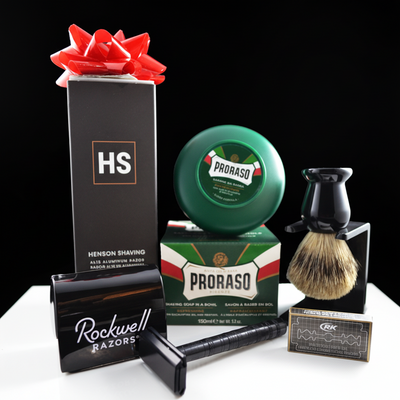
A dependable baseline razor. The Merkur 34C has been a reliable entry point for decades. It’s a two-piece, medium-weight, short-handled safety razor with predictable balance and mild geometry that forgives shaky hands. If you want an even milder, guided feel, the Henson razor lineup uses aerospace machining to set a tight blade angle. Many first-time safety razor users find Henson shaving straightforward because the head design discourages pressing down. Henson Shaving Canada and other regional stores stock the same models if you’re north of the border.
Blades you can actually control. The phrase safety razor blades usually means double edge razor blades. They’re cheap, sharp, and varied. Feather and Nacet lean very sharp, Astra and Gillette Platinum sit in the middle, Derby and Shark lean mild. Your skin type and beard coarseness determine the sweet spot. Buy a sampler with four or five brands rather than a hundred-pack of a single favorite from someone on a forum.
A brush and soap that build slickness. A synthetic shaving brush is low maintenance and dries fast. Badger and boar work beautifully too once broken in, but synthetics have improved to the point where they’re easier for beginners. Shaving soap or a quality cream with stable cushion matters more than a “gel strip.” Look for soaps that load easily and whip into a glossy, low-bubble lather. Glycerin- and tallow-based soaps both work; performance and water tolerance are what count, not the marketing.
Pre-shave and aftercare. Not mandatory, but helpful. A splash of warm water and 60 seconds of face hydration before lathering already helps. A simple, alcohol-light aftershave or balm calms the skin without fireworks. If you prefer a traditional edge razor feel, an alum block is a cheap feedback tool: light sting equals too much pressure.
Optional but nice. A simple stand keeps your razor and brush dry. A blade bank or tin for used razor blades keeps your trash safe. If you travel often, a slim case protects the razor in your dopp kit. If your hobbies mix, keep your cigar accessories far from your shaving area; soap scent and tobacco oils are a poor pairing for skin.
Cartridge vs safety vs straight: which path is yours
Cartridge shavers appreciate speed and simplicity but pay for it with recurring costs and more irritation risk. A safety razor slows you down a touch, reduces blade tug, and lets you fine-tune your shave. A straight razor or Shavette has the steepest learning curve but offers unmatched control once mastered.
Straight razor. Romantic, satisfying, and maintenance-heavy. You’ll need a strop, patience, and a steady hand. A Shavette uses disposable blades, dodging honing and stropping, but it can be less forgiving because there is no heavy spine guiding the angle. If you primarily want better skin comfort, a safety razor is the practical middle ground.
Single edge vs double edge. Single edge designs use thicker blades and can feel more rigid, which some people with coarse whiskers love. Double edge razor designs dominate the market for variety and affordability. If you’re starting out, a double edge is easier to source and resell if you change your mind.
The first week: build muscle memory for angle and pressure
Cartridge shavers rely on the pivot to do the work. With a safety razor, angle is your pivot. Aim for roughly 30 degrees between blade and skin. That number reads abstract, so here’s the tactile cue: place the top cap flat on your cheek, handle sticking out. Slowly rotate the handle downward until you hear and feel the blade begin to cut hair. That is your engagement point. Stay there. If you rotate more, the blade bites. If you rotate less, it just skates and tugs.
Pressure is almost none. Let the weight of the Razor do the cutting. If your knuckles whiten, you’re pressing. Choking up on the handle helps. Short strokes, about two to three centimeters, give you easier control and audible feedback. The sound will tell you more than you think; a crisp snip means clean cutting, a rough rasp means you lost the angle or your lather is dry.
Grain mapping matters. On a dry day with 24 hours of growth, feel your stubble with your fingertips in multiple directions. On cheeks it usually grows down, on the neck it can swirl or change direction midline. Shaving with the grain first is the biggest transition from a cartridge mindset. It reduces tug and protects follicles.
Lather that protects, not just perfumes
Walker’s law of lather: if it looks like glossy yogurt and clings to your finger without bubbles, it’s ready. People coming from canned foam often underhydrate their shaving soap or overwhip their cream. A thirsty soap wants a wet brush and incremental water additions while you whip in a bowl or on the face. You’re looking for a sheen that signals adequate hydration.
Canned gel has its place for travel, but a proper soap or cream adds slickness that keeps the blade gliding and reduces micro-abrasion. If your lather dries on the face mid-pass, you waited too long. Rewet the area with a damp brush, remix, and reapply. The skin under your jaw will thank you.
Step-by-step for the first three shaves
This is the only time we’ll use a list, because a checklist helps when you’re practicing something new.
Shower or hydrate your face with warm water for 2 to 3 minutes. Don’t rush this part. Hydrated hair cuts up to 40 percent easier by some barbershop estimates. Load your shaving brush for 20 to 30 seconds until the tips look pasted with soap, then build lather in a bowl or on your face, adding water in small dips until the sheen appears. Set your safety razor angle on a flat cheek and take short, light strokes with the grain. Keep the handle at the same angle as you move around the curve of the jaw. Rinse, relather, and do a second pass across the grain on cheeks if your skin tolerates it. On the neck, stick with the grain for the first week. Rinse with cool water, pat dry, and apply an alcohol-light splash or balm. If you have pinpoint weepers, a quick touch with an alum block or styptic pencil seals them.
By your third shave, you should notice less chatter from the blade and more consistent stubble reduction. If you feel tugging, change blades or add water to your lather. If you see razor burn, you likely pressed or chased a third pass too soon.
Matching blades to your beard
Think of blades like running shoes: all are built to move, but some suit your stride. Coarse, dense beards often respond well to sharper blades such as Feather, Gillette Nacet, or Perma-Sharp. Medium beards can start with Astra Superior Platinum, Gillette Platinum, or Personna Lab Blue. Sensitive skin that reacts quickly may prefer Derby Extra, Shark Super Chrome, or Voskhod. There are exceptions. I’ve seen a thick-bearded client thrive on a mild blade in a more efficient head because the combination tamed his impulse to push.
Change your blade after three to five shaves, more frequently if your whiskers are tough. A dull edge demands pressure, and pressure is the fastest path to irritation. With double edge razor blades costing a few cents each in bulk, replacing them often is a small price for comfort.
Choosing your first safety razor
If you want plug-and-play predictability, the Henson razor is engineered with tight tolerances and a shallow exposure that keeps the blade locked at the intended angle, which helps beginners. People moving from a disposable razor with a pivot tend to like how it guides them. A standard Merkur 34C strikes a balance between mildness and efficiency. It has enough blade feel to teach technique without punishing you for a small mistake.
Handle length is preference. Larger hands often like a longer handle for leverage, but short handles make it easier to keep your wrist neutral. Heavier razors do some of the work for you by adding momentum to the stroke. Lighter razors give more feedback and reduce damage if you slip. If you shave every day and have sensitive skin, choose mild to medium aggression. If you shave every two to three days with wiry growth, a medium to efficient head saves time without needing extra pressure.
Face, head, and body: adapting technique
Faces tolerate learning curves better than scalps. If you’re moving to head shaving, wait until your face technique is solid, then practice on the sides of the head first where the curvature is gentler. Keep strokes very short, rinse the head frequently, and reload lather any time it thins. For body shaving, the same with-the-grain first-pass principle applies. Knees, calves, and underarms have changing grain directions and tight skin. Stretch the skin lightly with your free hand to flatten the surface. If a spot bleeds often, check your angle there. It’s almost never the blade alone.
Neck trouble and how to fix it
The neck is where most cartridge shavers suffer. Hair grows in whorls, skin is thinner, and the slope invites pressure. Here’s what has worked repeatedly:
Map the grain under bright light and mark it with a cosmetic pencil once. People are often surprised to see two directions on either side of the Adam’s apple.
Shave that area last when the lather has had time to soften hair. Use the mildest blade https://waylontsti698.almoheet-travel.com/cigar-accessories-and-grooming-elevate-your-ritual-with-style that still cuts cleanly. Keep strokes microscopic. If you need a second pass, go diagonal rather than straight against the grain.
If you get consistent red tracks, shave the neck every other day for two weeks and moisturize nightly. Ingrowns often calm once you stop overcutting and allow hair to exit the follicle naturally.
When to consider a Shavette or straight razor
If the ritual appeals to you or you want full visibility at the edge for precise beard lines, a straight razor or Shavette can be rewarding. A Shavette uses half of a double edge blade or a single-edge insert, so there’s no honing. It also has less mass and no spine angle guide, which means you must maintain a steady, very shallow angle. Barbers use them for edging because you can see exactly where the blade lands.
For full-face shaving, most people benefit from six to ten practice sessions on sideburns and cheeks before they trust their neck to a Shavette. If your primary goal is irritation reduction, stay with safety razors until your skin is consistently calm, then experiment later if curiosity remains.
Cost and sustainability in real numbers
A decent cartridge head can cost several dollars and may last a week or so, depending on hair. Over a year, it’s easy to spend $150 to $300 on refills. With safety razors, the one-time cost of a razor ranges widely. A Merkur 34C sits in the low to mid tier. A Henson razor is pricier but precisely machined, and you won’t outgrow it quickly. Double edge blades cost around 8 to 30 cents each if you buy in sleeves. Even changing blades every three shaves, many daily shavers spend $15 to $30 a year on blades. That delta buys a lot of shaving soap.
Waste also drops. You’re discarding small steel slivers rather than plastic heads. Store used blades in a blade bank and recycle as scrap metal if your local facility accepts them.
Travel and maintenance
Traveling with a safety razor is straightforward if you plan. TSA rules in many countries allow the handle in carry-on but not the blades. Pack blades in checked luggage or buy a tuck at your destination. A compact synthetic shaving brush and a small tub of shaving cream travel well. Rinse and dry your Razor thoroughly after each use, especially in hard water areas. Scale and soap scum dull shine and can trap residue near the threads. Every month or two, disassemble and clean with a soft toothbrush and a drop of dish soap. Avoid harsh abrasives that scratch plating.
What about an electric or a hybrid routine
Electric shavers still have their place for five-minute touch-ups or travel. Some people use a hybrid: electric on weekdays, safety razor on weekends. That works if your skin tolerates it, but switching back and forth can keep your skin in a perpetual adjustment phase. If your goal is to train skin toward less irritation, stay consistent for at least a month. After that, you’ll know if a hybrid pattern makes sense.
Troubleshooting common frustrations
Razor burn after a great lather. You probably did an aggressive against-the-grain pass too early. Replace it with a diagonal pass and a few buffing strokes with minimal pressure.
Tugging from the first stroke. Either the blade is dull or your angle is too shallow. Switch to a fresh blade, then roll the handle a few degrees until the blade engages smoothly.
Weepers at the corners of the mouth. Reduce stroke length to near micro strokes in that area. Those hairs sprout in different directions. Try a cross-grain pass instead of straight against.
Lather vanishing on the second pass. Add more water earlier in the build. Glossy, hydrated lather survives multiple passes better than fluffy meringue.
Persistent ingrowns. Clip your stubble to a uniform length with a trimmer the night before. Shave with the grain only for a week. Consider a mild chemical exfoliant, such as a low-percentage salicylic acid a few evenings a week, not on shave days.
Aftershave that actually helps
Alcohol-heavy splashes feel clean but can aggravate sensitive skin. If you like the sting, go light and follow with a simple balm. Ingredients that help: allantoin, panthenol, glycerin, and light esters. Heavy fragrances can sensitize skin over time. If your face flushes or your neck warms hours after a shave, suspect fragrance first. Witch hazel without added alcohol is a solid middle ground for many.
A word on brand rabbit holes and forums
There is no single best Razor, only better fits. The Merkur 34C endures because it suits many. Henson shaving has built a following by reducing variables for beginners. Boutique stainless razors can be beautiful long-term tools, and there are vintage gems that shave like a dream. Try to change one variable at a time. If you buy a new razor, keep your blade and soap the same for a week. That way the feedback you feel points to the right culprit or hero.
When a disposable razor still makes sense
A disposable razor is fine for a gym bag or an emergency travel shave. They excel when you can’t carry blades or need a quick pass without your usual setup. Just don’t judge your safety razor results by the speed of a two-minute disposable sprint. The comfort and closeness you get from building lather and keeping a steady angle will outclass it when you have the time.
Putting it all together
The early wins come from three places: mapping your grain, respecting the angle, and building better lather. After that, blade choice and Razor design refine the experience. Over time, you will likely settle into a two-pass routine that beats any cartridge shave you used to do, with less redness and fewer ingrowns. Keep your grip relaxed, mind the sound of the blade, and treat each pass like a controlled glide rather than a scrape. If you do, the switch from cartridge to safety razors will feel less like a leap and more like an upgrade you wish you had made years ago.
For most, a modest setup is enough. A Merkur 34C or a Henson razor, a handful of double edge razor blades from a sampler, a synthetic shaving brush, and a well-behaved shaving soap. Learn on that, then decide if you want to explore efficient razors, single edge designs, or even try a straight razor or Shavette for the art of it. The path is wide, but the fundamentals never change: light touch, right angle, good lather, sharp blade. The rest is just preference.
