ADHD and Creativity in Writing: Why Drafting is a Dream and Editing is a Nightmare
If you are a writer with ADHD, you are likely intimately familiar with the "Tuesday at 3:00 PM" phenomenon. It’s that precise moment when your morning enthusiasm has completely evaporated, the stimulant medication is tapering off, and you are staring at a 5,000-word draft that reads like it was written by three different people in a frenzy. You know the editing needs to happen, but your brain—craving the high-dopamine thrill of starting something new—has metaphorically checked out and gone to the pub.
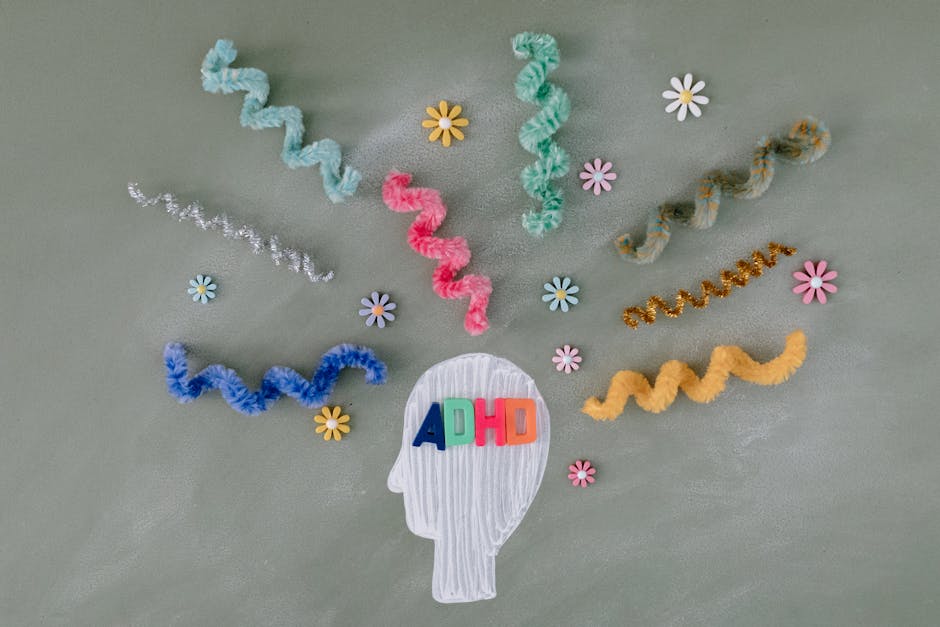
For years, we have been told that writers with ADHD just need to "be more disciplined" or "stay focused." As an editor who has spent over a decade interviewing clinicians and observing the reality of the creative process, I can tell you: that advice is not just unhelpful; it is fundamentally misaligned with how an ADHD brain actually functions. It’s time to stop treating a neurobiological difference like a moral failing.
The ADHD Cognitive Style: Why We Are Masters of the Draft
To understand the disconnect between drafting and editing, we have to stop viewing ADHD solely as a deficit. Yes, executive dysfunction is a core component of the condition, but it sits alongside a profound capacity for divergent thinking. When you are drafting, your brain is firing across neural pathways that aren't occupied by the "linear police." You are connecting disparate ideas, spotting patterns, and generating new concepts at a rate that would leave a neurotypical colleague dizzy.
Drafting is essentially a giant dopamine search. It is exploratory. It is generative. Every sentence is a potential discovery. However, editing requires a shift from divergent to convergent thinking. You are no longer creating; you are curating. You are shifting from the "explorer" mode to the "administrator" mode, and for the ADHD brain, the administrator is frequently understaffed, overworked, and currently distracted by a shiny object in the distance.
The "Tuesday at 3:00 PM" Reality Check
When I talk to writers about their workflow, I always ask: "What does this look like on a Tuesday at 3:00 PM?"
On a Tuesday afternoon, your executive function is likely at its lowest ebb. The initial novelty of the project has worn off. The serotonin and dopamine spikes you got from the first draft have plateaued. Now, you’re left with the "drudge work": checking citations, fixing passive voice, and ensuring your thesis statement actually holds water.
For an ADHD brain, this is a recipe for internal friction. You aren't "lazy"; you are experiencing a collapse in your reward-processing system. The work required to edit feels disproportionately heavy because it lacks the immediate feedback loop of creative output.
The UK Clinical Context: Guidance and Treatment
In the UK, the management of ADHD is governed by the National Institute for Health and Care Excellence (NICE) guidelines [NG87]. NICE provides the gold standard for how ADHD is diagnosed and treated within the NHS, typically involving a combination of pharmacological support and psychoeducation.
It is important to understand that traditional stimulant treatments (like methylphenidate or lisdexamfetamine) are designed to improve executive function by increasing dopamine and noradrenaline levels in the prefrontal cortex. For many, this acts as a "bridge" to help them complete the mundane tasks of editing. However, medication is not a magic eraser for creative hurdles. If you find your current treatment plan isn't hitting the mark, speak to your clinician about reviewing your dosage or strategy—don't simply assume you need to try harder.
Additionally, for those who find traditional medications ineffective or poorly tolerated, the landscape of ADHD care is slowly shifting. Some patients now explore specialist clinics for alternative or adjunct therapies. For example, some individuals investigate specific pathways through resources like the Releaf ADHD medical cannabis page, which outlines how medical cannabis is being reviewed as a potential option for treatment-resistant ADHD. If you are exploring this, remember: it is a medical pathway, not a shortcut. Any intervention should always be managed by a registered specialist.
The Editing Struggle: A Tactical Breakdown
Rather than relying on vague willpower, let’s look at the actual barriers you face when editing and how to lower the cognitive load:
Challenge ADHD Mechanism Practical "Tuesday Afternoon" Strategy Decision Fatigue Overwhelmed by infinite choices (word choice, tone, structure). Use "Body Doubling" or a dedicated editing checklist. Do not edit for style and grammar at the same time. Distraction The brain seeks novelty over repetitive review. Change your environment. If you wrote in your office, edit in a library or a café. "Perfecting" instead of "Fixing" Hyperfocusing on a single paragraph. Set a timer for 25 minutes. If you haven't finished the section, move on anyway. Perfection is the enemy of completion.
Moving Beyond the "Just Discipline Yourself" Myth
If someone tells you to "just be more disciplined," you have my full permission to ignore them. Discipline is a poor substitute for a system that accounts for your neurobiology. Instead, consider these pillars of a healthier writing practice:

Separate the Roles: I treat "The Writer" (creative, messy) and "The Editor" (clinical, cold) as two different employees. They are not allowed to be in the room at the same time. When the Writer is working, the Editor stays out. When the Editor is working, the Writer is not allowed to make changes to the plot. Externalise the Brain: Use text-to-speech software. Hearing your work read back to you bypasses the visual habituation that occurs when we read our own words too many times. It forces your brain to engage with the text in a new way. Accept the "Good Enough": Many of us with ADHD struggle with "all-or-nothing" thinking. We want the edit to be perfect, so we don't start. Aim for "functional" rather than "flawless." You can always re-edit later.
The Bottom Line
Writing with ADHD isn't about fixing your brain; it’s about acknowledging its unique operating system. You are capable of immense output, but the "editing phase" will always be a higher-friction environment than the "drafting phase." That is a biological reality, not a character flaw.
The next time you find yourself stuck on a Tuesday at 3:00 PM, recognise it for what it is: a dip in neurotransmitter availability, not a sign that you aren't a "real" writer. Close the document, take a walk, and approach the stimulants appetite suppression edit as an administrator tomorrow morning when your brain is fresh. Your creativity is your strength—let your systems be your support.