The Math of the Margin: How Race Teams Actually Manage a Stint
If you listen to the radio chatter during an endurance race, you will hear a lot of talk about "managing the gap" or "saving the rubber." Fans are often told that the driver is driving to a "delta." To the uninitiated, this sounds like a vague, almost mystical directive. Some might call it "instinct." Let me stop you right there: instinct doesn't win championships. Data does.
In my eight seasons working the pit wall, I never once made a call based on a "gut feeling." Every stint management strategy is the result of thousands of simulations, refined by high-fidelity telemetry, and tempered by a healthy distrust of certainty. Let’s pull back the curtain on how teams actually decide how hard to push.
The Economics of Energy: Tyre and Fuel Management
At its core, a stint is an exercise in resource allocation. You have two primary expendable assets: tyre life (grip) and fuel mass. Every extra decibel of force you put into the asphalt accelerates the degradation of your rubber and the depletion of your tank. If you burn your tyres at 100% capacity in the first five laps, you might be fast early, but you will pay a compound interest rate in lap time for the remainder of the stint.
When we talk about stint management, we are really talking about the trade-off between current performance and long-term track position. You aren't just racing the car in front of you; you are racing the degradation curve of your own equipment.
Let’s run a quick back-of-the-envelope calculation. If your car loses 0.05 seconds of pace per lap due to thermal degradation, and you push 2% harder than the base model, your degradation coefficient might jump to 0.08 seconds per lap. If your stint is 30 laps, that extra push saves you 0.5 seconds in the first five laps but costs you roughly 0.9 seconds over the final five. The math rarely favors the "hot lap" unless you are in a defensive position where track position is physically impossible to reclaim.
The Monte Carlo Principle: Why Certainty is a Lie
A major annoyance in this industry is the tendency for pundits to treat race outcomes as linear projections. In reality, a race is a probabilistic system. We don't predict a finish time; we generate a probability distribution.
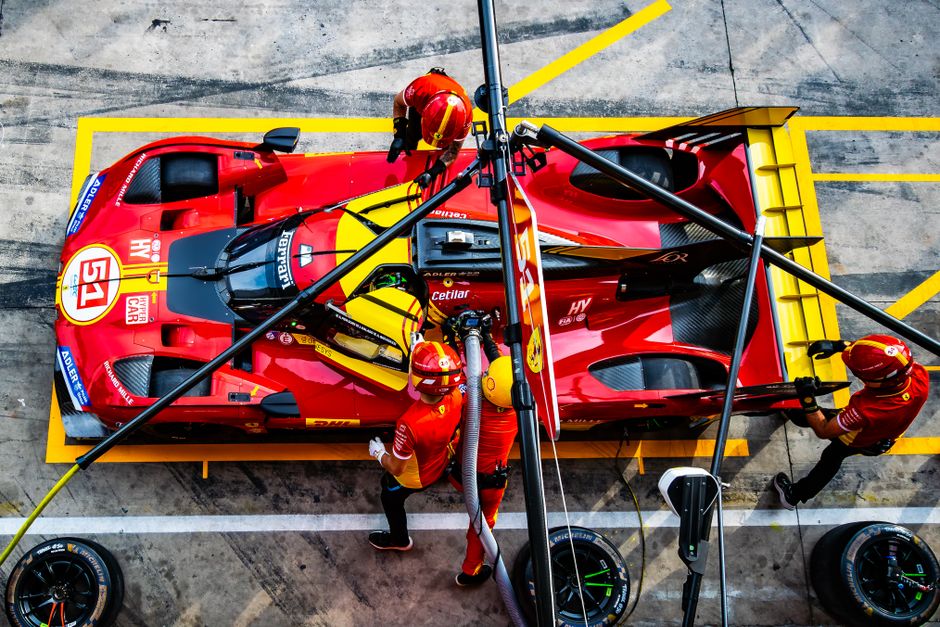
This is where the Monte Carlo principle comes in. We run thousands of iterations of a stint model, varying parameters like track temperature, driver error rates, and traffic congestion. We look at the distribution of outcomes. If our simulation shows that pushing harder results in a 60% chance of being faster over the stint but a 40% chance of a catastrophic "cliff" in tyre performance, we have to weigh the risk.
When you look at the betting markets—places like MrQ, for instance—they are effectively trying to perform this same calculus to set their odds. However, unlike a bookmaker, a race engineer isn't just looking for an average; we are looking for the tail-end risks. We aren't worried about the median outcome; we are worried about the 5th percentile outcome where the tyre blows out or the car runs dry.
As noted in various papers published in Applied Sciences (MDPI), the modeling of vehicle dynamics is increasingly focused on these stochastic variables. We are moving away from deterministic "best-case" scenarios and toward robust models that handle environmental noise effectively.
Data Density and the Role of Telemetry
None of this works without high-quality telemetry. We are pulling hundreds of channels of data in real-time. We see damper velocities, brake temperatures, and slip angles. The challenge isn't having the data; it’s managing the density.
Raw telemetry is incredibly noisy. You cannot make a strategy call based on one anomalous spike in brake disc temperature. You need to filter the noise to find the signal. We use rolling averages and signal processing to ensure that the "push" command we send to the driver is based on a genuine trend, not a transient spike in sensor feedback.
If you want to understand how this is evolving, I highly recommend keeping an eye on the technical reports from the MIT Technology Review. They frequently highlight how machine learning is being applied to IoT and sensor arrays—technology that is fundamentally the same as what we strap onto a prototype chassis. The bridge between academic data science and motorsport engineering has never been shorter.
The Comparison Problem
I must call out that comparing F1 tyre management to, say, GT3 endurance racing is only a partial comparison. In F1, you are managing a highly complex hybrid system with extremely sensitive compounds; in GT3, you are managing a heavier car with much higher tyre longevity. Using the same stint management logic for both will result in a catastrophic failure to optimize the car. They are distinct engineering challenges that happen to share the same vocabulary.
Table: Factors Influencing Stint Pace
Variable Primary Impact Risk Level Track Evolution Increases grip, lowers wear Low Traffic/Congestion Forces "out of phase" pace High Fuel Load Affects balance and wear Medium Ambient Temp Influences thermal window High
Real-Time Decision Making: The Pit Wall Reality
When the car is on track, the "strategy" is not static. It is a dynamic process. Every lap, the driver provides feedback, and every lap, the telemetry confirms whether our initial Monte Carlo simulations were accurate.
If the data shows our tyre wear is 5% higher than predicted, we don't just "push harder." We recalculate the remaining fuel/tyre budget. This is the "real-time" aspect that makes pit wall work so pressurized. If we have to pull the driver back, we have race telemetry data to explain *why* so they trust the data. If a driver loses trust in the math, they will stop hitting their marks.
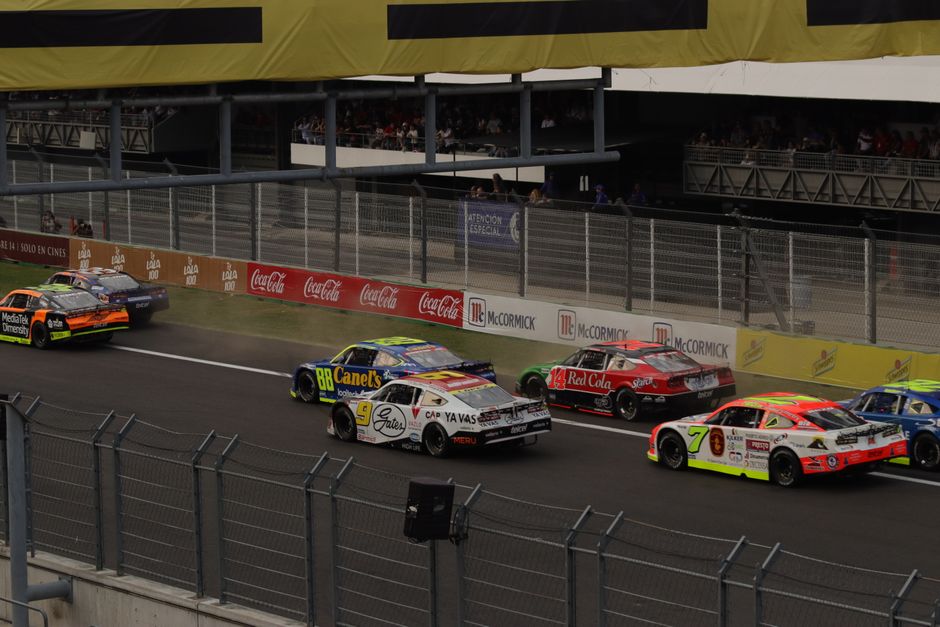
People often refer to this as a "game-changing" aspect of modern racing, but that is a lazy, vague phrase. It is not "game-changing"; it https://varimail.com/articles/the-geometry-of-the-pit-wall-how-to-spot-a-strategy-race/ is the fundamental requirement of the sport. It is the transition from "driving by the seat of the pants" to "optimizing a multi-variate system in a high-latency environment."
Conclusion: The Math Doesn't Lie
If you ever hear someone say that a win was down to "pure instinct," they are doing a disservice to the thousands of lines of code and the massive telemetry arrays behind the scenes. Stint management is not a guess. It is the rigorous application of probability to a machine moving at 200 mph.
We use simulations to minimize the unknown. We use telemetry to measure the reality. And we use the Monte Carlo principle to prepare for the inevitable chaos that is endurance racing. Next time you see a team radioing a driver to "save fuel" while they are in the middle of a battle, remember: they aren't guessing. They’ve run the numbers, they know the risk, and they’ve already calculated exactly how much margin they can afford to burn.
The math is the only thing keeping them on the track until the chequered flag falls.