DIY vs. Professional Tree Service: Pros and Cons
Homeowners often call about a leaning maple or a stubborn stump and ask the same first question: can I handle this myself, or should I hire a crew? The answer depends less on bravado and more on physics, biology, and liability. I have spent enough mornings under wet canopies and evenings filing saw chains to know that the right choice shifts with the species, the site, the season, and your tolerance for risk. Tree work rewards judgment.
Why the stakes feel higher than other home projects
A tree is not a wall you can rebuild if you make a bad cut. Wood stores energy in twisted fibers. Branches are springy. Stems are heavy beyond intuition. Once a trunk tips, momentum wins, and the nearest fixed object, whether roof, fence, or power drop, becomes the brake. Add wind, decay pockets, or sloped ground and simple jobs become complicated. On the other hand, paying for professional tree service can feel expensive, especially when all you see is a few hours of noisy activity. That friction fuels the DIY impulse.
What follows is a grounded look at where the line sits between reasonable homeowner work and the kind that belongs to a trained crew. I will talk through equipment realities, cost math in Northeast Ohio, telltale risks, and practical ways to minimize surprises whether you do it yourself or hire a pro for tree service in Akron and the surrounding suburbs.
What tree work really involves
Tree care looks like cutting and hauling, but the hard part is reading wood. Live oak branches have tight fibers that tear if undercut poorly. Silver maples carry a lot of crown mass far out from the trunk, so they behave like levers. Norway spruces shed entire sheets of needles in one go, slicking the ground. Ash trees killed by emerald ash borer become brittle and unpredictable, even when they look solid from the street. Those material differences affect where you place a hinge, how you rig a limb, and whether a ladder is a bad idea, which it usually is.
Even small diameter stems can pinch a saw if you do not relieve compression and tension. A 12 inch trunk that seems light weighs 400 to 600 pounds depending on moisture content. A 30 inch red oak that you want gone is not a Saturday chore, it is a high‑risk operation with tons of load suspended over your property. These are not scare tactics, they are the physics that shape outcomes.
When DIY can make sense
There are scenarios where a careful homeowner with basic tools and common sense can succeed. A five inch ornamental pear splitting at the crotch, accessible from the ground, away from service lines and structures, with room to lay it down, qualifies. Clearing small storm‑broken limbs from a lawn, cutting firewood from already felled logs, or pruning select lower branches for sidewalk clearance also fit. You can rent a light chipper for brush, use a handsaw or a small chainsaw with fresh PPE, and work slowly.
The line starts to shift when you add height, lean, decay, or targets. Once you leave the ground on a ladder with a powered saw, the risk spikes. Ladders kick out under side load. Reaching while cutting ruins balance. That is when hobby work shades into professional tree service.
The hidden risks that most people underestimate
The first hidden risk is what you do not see inside the wood. Fungi eat from the center outward in many species, leaving a sound shell and a hollow core. A hinge in decayed fiber fails without warning. Past pruning wounds create weak unions where bark grew inward, known as included bark, which can rip under tension. Old cable and nails inside urban trees will throw a chain and hand you a bad day.
The second risk sits overhead. Utility drops to a home can look safely distant, but lines move when a limb swings. Even with the power company’s clearance patrols, secondary lines can be within reach. If your job is anywhere near energized conductors, do not cut. The utility or a line‑clearance certified arborist must handle it.
The third risk is the ground itself. Clay soils in Summit County hold water, so boots slide and ladders sink. A neat backyard can hide irrigation lines, septic components, or buried dog fences. Equipment choice matters partly because the site has a say in your footing.
Equipment realities, not catalog promises
A homeowner‑grade chainsaw will do good work on small cuts with a sharp chain and no pinch. It will not hold torque under binding or rip through hardwood the way a pro saw does. Weight and vibration also tire you faster. One hour of careful cutting on a storybook fall day is not the same as sawing on a steep slope in July heat.
Rigging scares people for good reason. Basic rope and a friction device can control descent if you understand angles and loads. Without that foundation, slinging a branch and hoping for the best drags you toward mistakes. Rental bucket lifts look like an answer, but getting a tow‑behind lift through a fence gate and set on level footing, then working safely in traffic with swinging limbs, is not a beginner’s task. Climbing with spurs on a tree you plan to remove is a skill, not a workaround.
Stump work sits in its own category. Home centers rent grinders that weigh a few hundred pounds, bounce around, and nibble slowly. They can handle a 12 inch pine stump with patience. They will make a large red oak stump feel like a weeklong project. Professionals bring heavier tracked grinders that chew fast and control chip throw. If you see references online to stump griding, that is often just a misspelling of stump grinding, but the machine and the technique still matter.
The cost equation in Akron, with realistic ranges
For homeowners comparing quotes to DIY, numbers help. In the Akron market, prices swing with access, size, and risk:
Removing a small ornamental tree under 15 feet with open yard access might run 200 to 400 dollars from a reputable tree service. A medium tree in the 25 to 40 foot range, minimal rigging, no wires, could be 500 to 1,200 dollars. Large tree removal in tight quarters or near structures often sits between 1,500 and 4,000 dollars, sometimes more for complicated crane work. Stump grinding for a modest stump often adds 100 to 300 dollars, maybe 10 to 15 dollars per diameter inch when priced that way. Multiple stumps reduce the per‑unit cost.
If you DIY, plan for gear you do not already own. A quality homeowner chainsaw, helmet with face shield and muffs, chainsaw chaps, gloves, felling wedges, fuel, bar oil, and a basic first aid kit can land between 400 and 900 dollars. A weekend stump grinder rental might be 125 to 200 dollars. A tow‑behind lift, if you go that route, often runs 250 to 400 dollars per day plus delivery. You still must haul brush, which can mean dump fees or a chipper rental.
The key difference is liability. If a limb hits your neighbor’s garage, your homeowner’s policy might cover it, but insurers look closely at negligence. If a contractor with proper insurance causes damage, their policy pays. That risk transfer is part of what you buy with professional tree service.
Permits, codes, and neighborhood realities
Some municipalities around Akron require permits for removing street trees or regulated species. HOA covenants may restrict pruning that changes a canopy line. Summit County stormwater rules can also affect slope stabilization on properties bordering creeks, which means you cannot clear a line of trees without considering erosion. A credible tree service Akron provider will know local quirks, from Revere Township’s right‑of‑way rules to Copley’s guidance near detention basins. DIYers sometimes discover these rules only after a neighbor calls.
Special cases where professional help is your best move
Two categories jump out. Dead ash and storm‑damaged trees.
Emerald ash borer turned many otherwise manageable removals into brittle puzzles. Dead ash does not bend, it snaps. Climbing in dead ash is dicey even for experienced arborists, and cutting from the ground exposes you to barber‑chairing, where the trunk splits vertically and whips back. If you have an ash with more than a season of decline, call for professional tree removal.
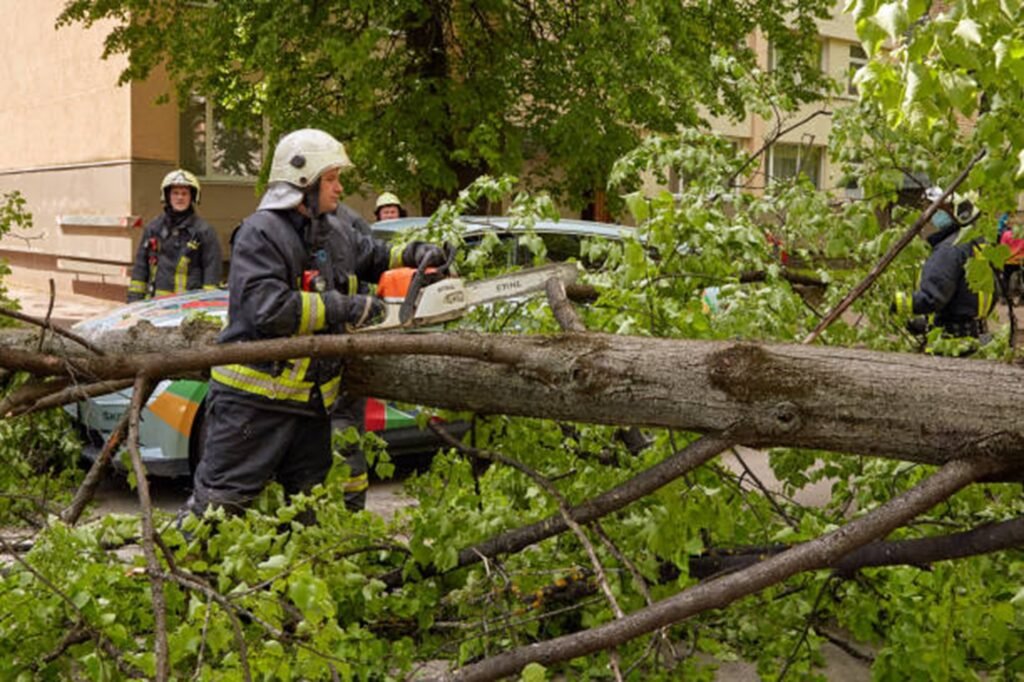
Storm damage cleanup is its own discipline. After a wind event, wood fibers are loaded in unpredictable ways. A limb pinned under another stores energy like a spring. People get hurt when the cut that frees it kicks the log in a new direction. Add partial roof impalements and tangled utility drops and storm damage cleanup belongs to trained crews with cribbing, slings, and an understanding of load paths. This is not the time to learn rigging.
How professionals approach a removal
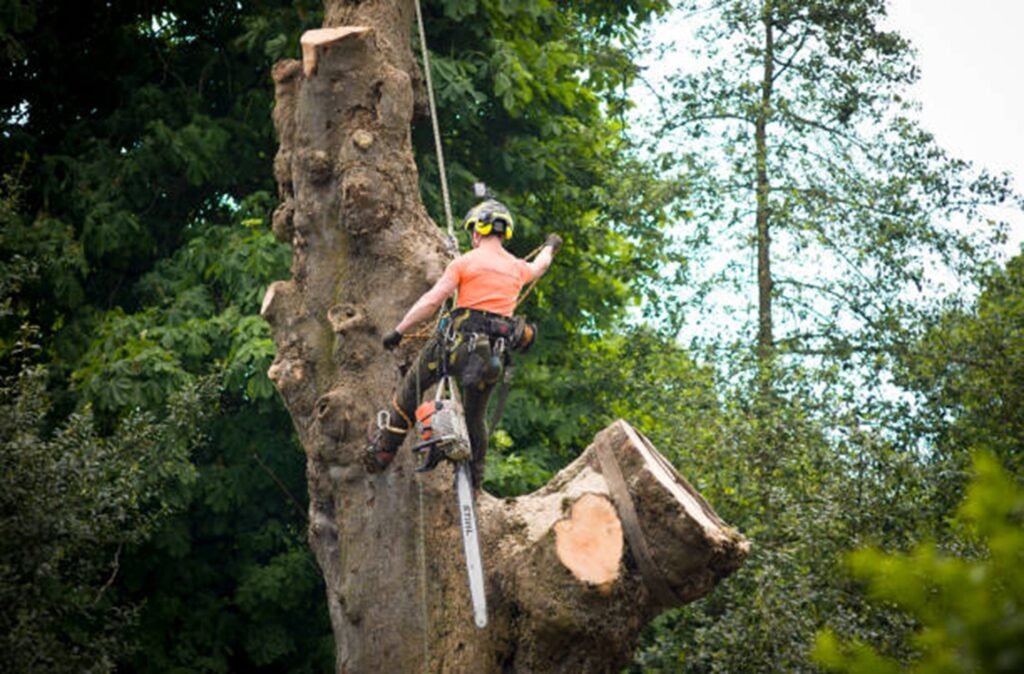
When a crew shows up for tree removal Akron jobs, the rhythm follows a pattern shaped by hazards. First is the walk‑around to find targets, lean, decay, wildlife, and lines. They set a drop zone, sometimes with ground protection mats if the yard is soft. The climber or lift operator establishes a tie‑in point, usually higher than most homeowners would consider necessary, because high tie‑ins reduce swing and improve control. Every cut on a heavy piece gets evaluated for balance. The ground crew keeps line of sight, clears brush as it falls, and feeds the chipper without exposing anyone to the chipper infeed. That choreography looks like speed from the street, but it is mostly timing.
Stumps come last. A grinder operator sets depth, usually 6 to 10 inches below grade for turf restoration, deeper if replanting. Chips get left as mulch or hauled. A good operator will look for surface roots that trip mowers in later seasons and shave them as well.
Trade‑offs that do not fit in a spreadsheet
Time has a cost even if you do not write a check for it. If you enjoy physical work and understand your limits, a Saturday of brush cutting and light pruning can be satisfying. If you would rather watch your kid’s game than feed a chipper, then hire it out. Safety is not just your own health either. A spouse’s peace of mind is a real factor. So is neighborhood goodwill. Running a saw for six hours on a Sunday morning invites conversations you may not want.
Environmental outcomes also tilt the decision. Professionals with an arborist orientation will propose structural pruning rather than removal where it makes sense, suggest crown reduction on the right species at the right time, and know when to walk away from topping requests. Good tree care preserves shade and property value. Wholesale removal because it is easier to mow is short‑term thinking.
Quick comparison for common scenarios
Small ground‑level pruning cuts under 2 inches in diameter, no ladder, no wires, clear work zone: DIY is reasonable with hand tools and PPE. Felling a small tree with room to drop and no targets: DIY is possible with wedges, a plan, and someone else watching. If the tree leans toward a target, hire out. Removing any tree within two lengths of a structure or service line: Call a professional tree service. Climbing or lift work, or jobs involving rigging over a roof: Professional only. Stump grinding for a single small stump in open lawn: DIY with a rental makes sense. Large hardwood stumps or many stumps: professional grinding is faster and cleaner.
Choosing a provider you will not regret
In a city the size of Akron, you will find a spectrum from one‑truck outfits to established firms with cranes. Verify three things before you let anyone start. Insurance, specifically general liability and worker’s compensation, in writing from their carrier. References that sound like your job, not just general praise. And a clear scope that covers cleanup, stump work, and yard protection if needed. If a bid is far lower than the others, ask what is missing. Sometimes it is stump grinding. Sometimes it is insurance.
Training matters too. An ISA Certified Arborist credential does not make a magician, but it signals you are not dealing with a pure cut‑and‑haul operation. Ask how they will protect nearby trees from impact or soil compaction. Watch how they handle tools in your first meeting. Sloppy on the ground often means sloppy aloft.
Species notes and seasonal timing around Akron
Local species act differently in the saw. Sugar maples cut cleaner than silver maples, but their crowns are dense. Black locust is hard on chains. Cottonwood is light but awkward in large pieces. Norway spruce sheds cones like marbles underfoot. If you are pruning oaks, cycle timing for oak wilt matters in parts of Ohio. Many pros avoid major oak pruning in the height of the growing season to curb disease spread. Winter removals can be kinder to turf and sometimes cheaper if schedules open up, though ice complicates footing.
Spring storms are the usual headline, but early autumn winds have surprised more than a few homeowners with shallow‑rooted trees in saturated soil. After any big blow, do a slow walk under your canopy. Look for hangers lodged in branches. A ten pound chunk of deadwood does not look big on the ground, but it can ruin a day if it falls on someone. If you find one lodged high, resist the temptation to dislodge it with a pole saw you cannot control. Call a crew.
If you choose the DIY path, prepare like a pro
Suit up correctly: chainsaw chaps that cover from waist to boot top, a helmet with face shield and ear protection, gloves, and sturdy boots. Skip shorts and sneakers. Walk your work zone before you cut. Identify two escape routes for felling, clear tripping hazards, and keep bystanders and pets well away. Maintain your saw and chain. A dull chain is dangerous because you force cuts. Keep a file handy and learn to sharpen. Mind kickback and pinch. Keep the bar tip away from wood you cannot see, use wedges to keep the kerf open, and never cut above shoulder height. Stop when anything surprises you. If a cut binds unexpectedly or the tree behaves oddly, step back and reassess. Pride is not a plan.
That checklist seems basic on paper. In practice, it is the line between finishing with sore muscles and calling for help with a bleeding leg. I have seen most injuries follow small lapses, not gross negligence.
What homeowners often forget about cleanup
Cutting is half the work. Hauling brush eats the day. If you do not have a truck or trailer, you will either stack it at the curb and hope for a municipal pickup window or rent a chipper. Small chippers choke on forked limbs and require a steady hand at the infeed. Chips go everywhere downwind unless you manage the chute. Professionals often include brush chipping in their price, and they will stage piles to feed efficiently. If the crew lays mats, your lawn will look normal once the mats lift, which beats ruts you will stare at for years.
For stump areas, chips settle for weeks. If you plan to replant or lay sod, ask for the stump hole to be backfilled with topsoil after grinding. In Akron’s heavy soils, chip‑only fill can turn into a sponge that stays wet and spongy well into June.
A note on tree removal versus tree care
Tree removal solves immediate hazards and conflicts, but it can be final in a way you regret on the first July heat wave. Before you cut, ask an arborist about structural pruning, weight reduction on overextended limbs, or root zone improvements. Sometimes you can relieve risk without losing shade. Tradeoffs are real. A heavily topped tree looks safer to a nervous homeowner because it is smaller, but topping creates weak regrowth and long term problems. Responsible pros will steer you away from that trap. If you truly need tree removal, owning the decision feels better when you tried other paths first.
Storm damage cleanup, from the field
The morning after the derecho years ago, we worked a street in West Akron where sycamores had peeled limbs like banana skins. The simple work was dragging brush out of the road. The tricky work was the tear‑outs where big limbs had levered roofs and gutters. We cribbed with blocks, made shallow relief cuts to bleed energy, and used a speedline to pull sections clear to the driveway before lowering. A neighbor had attempted a similar job with a tow strap and pickup. The strap slipped, the limb swung, and the corner of the roof wore the bruise. He was lucky it was just a bruise. That is the difference between gear and technique. Storm damage cleanup is not about muscle. It is about controlling stored energy so you do not release it all at once.
When local knowledge changes the plan
Tree service Akron providers plan around our microclimate and infrastructure. Hills around Merriman Valley funnel gusts. Older neighborhoods have smaller side yards and tight alley access. Many backyards hide steep drop‑offs toward ravines. Crews that know the terrain bring narrow machines, extra cribbing, and more rope than steel when lawns are soft. In winter, salt spray near busy roads desiccates roadside trees, so you see more deadwood breakage on the first thaw winds. The more a provider understands these patterns, the cleaner your job runs.

Putting it together for your property
If you are staring at a problem tree, start with targets and uncertainty. If a mistake points toward your roof, a neighbor’s yard, or a wire, that alone argues for hiring. If the work lives at Red Wolf Tree Service tree service ground level, away from targets, and within your skills, DIY can save money and, done right, feel satisfying. Factor the value of your time, the cost of gear you will actually keep using, and the relief that comes from hearing the chipper and knowing the liability is not yours.
In the end, tree work is not a test of courage. It is a judgment call. You are choosing between your own bandwidth and risk tolerance and the experience of a crew that does nothing but read wood and move it safely. Whether you need light pruning, full tree removal, stump grinding or, as some flyers misprint it, stump griding, or storm damage cleanup after a rough night, weigh the tradeoffs with your eyes open. The right decision is the one that leaves your property safer, your trees healthier, and you home for dinner with all ten fingers.
Name: Red Wolf Tree Service
Address: 159 S Main St Ste 165, Akron, OH 44308
Phone: (234) 413-1559
Website: https://akrontreecare.com/
Hours:
Monday: Open 24 hours
Tuesday: Open 24 hours
Wednesday: Open 24 hours
Thursday: Open 24 hours
Friday: Open 24 hours
Saturday: Open 24 hours
Sunday: Open 24 hours
Open-location code: 3FJJ+8H Akron, Ohio Map/listing URL: https://www.google.com/maps/place/Red+Wolf+Tree+Service/@41.0808118,-81.5211807,16z/data=!3m1!4b1!4m6!3m5!1s0x8830d7006191b63b:0xa505228cac054deb!8m2!3d41.0808078!4d-81.5186058!16s%2Fg%2F11yydy8lbt
Embed:
"@context": "https://schema.org", "@type": "HomeAndConstructionBusiness", "name": "Red Wolf Tree Service", "url": "https://akrontreecare.com/", "telephone": "(234) 413-1559", "address": "@type": "PostalAddress", "streetAddress": "159 S Main St Ste 165", "addressLocality": "Akron", "addressRegion": "OH", "postalCode": "44308", "addressCountry": "US" , "openingHoursSpecification": [ "@type": "OpeningHoursSpecification", "dayOfWeek": "Monday", "opens": "00:00", "closes": "23:59" , "@type": "OpeningHoursSpecification", "dayOfWeek": "Tuesday", "opens": "00:00", "closes": "23:59" , "@type": "OpeningHoursSpecification", "dayOfWeek": "Wednesday", "opens": "00:00", "closes": "23:59" , "@type": "OpeningHoursSpecification", "dayOfWeek": "Thursday", "opens": "00:00", "closes": "23:59" , "@type": "OpeningHoursSpecification", "dayOfWeek": "Friday", "opens": "00:00", "closes": "23:59" , "@type": "OpeningHoursSpecification", "dayOfWeek": "Saturday", "opens": "00:00", "closes": "23:59" , "@type": "OpeningHoursSpecification", "dayOfWeek": "Sunday", "opens": "00:00", "closes": "23:59" ], "geo": "@type": "GeoCoordinates", "latitude": 41.0808078, "longitude": -81.5186058 , "hasMap": "https://www.google.com/maps/place/Red+Wolf+Tree+Service/@41.0808118,-81.5211807,16z/data=!3m1!4b1!4m6!3m5!1s0x8830d7006191b63b:0xa505228cac054deb!8m2!3d41.0808078!4d-81.5186058!16s%2Fg%2F11yydy8lbt", "identifier": "@type": "PropertyValue", "name": "Open Location Code", "value": "3FJJ+8H Akron, Ohio"
🤖 Explore this content with AI:
💬 ChatGPT 🔍 Perplexity 🤖 Claude 🔮 Google AI Mode 🐦 Grok
Red Wolf Tree Service provides tree removal, tree trimming, stump grinding, storm cleanup, and emergency tree service for property owners in Akron, Ohio.
The company works with homeowners and commercial property managers who need safe, dependable tree care and clear communication from start to finish.
Its stated service area centers on Akron, with local familiarity that helps the team respond to residential lots, wooded properties, and urgent storm-related issues throughout the area.
Customers looking for help with hazardous limbs, unwanted trees, storm debris, or overgrown branches can contact Red Wolf Tree Service at (234) 413-1559 or visit https://akrontreecare.com/.
The business presents itself as a licensed and insured local tree service provider focused on safe workmanship and reliable results.
For visitors comparing local providers, the business also has a public map listing tied to its Akron address on South Main Street.
Whether the job involves routine trimming or urgent cleanup after severe weather, the company’s website highlights practical tree care designed to protect homes, yards, and access areas.
Red Wolf Tree Service is positioned as an Akron-based option for people who want year-round tree care support from a local crew serving the surrounding community.
Popular Questions About Red Wolf Tree Service
What services does Red Wolf Tree Service offer?
Red Wolf Tree Service lists tree removal, tree trimming and pruning, stump grinding and removal, emergency tree services, and storm damage cleanup on its website.
Where is Red Wolf Tree Service located?
The business lists its address as 159 S Main St Ste 165, Akron, OH 44308.
What areas does Red Wolf Tree Service serve?
The website highlights Akron, Ohio as its service area and describes service for local residential and commercial properties in and around Akron.
Is Red Wolf Tree Service available for emergency work?
Yes. The company’s website specifically lists emergency tree services and storm damage cleanup among its core offerings.
Does Red Wolf Tree Service handle stump removal?
Yes. The website includes stump grinding and removal as one of its main tree care services.
Are the business hours listed publicly?
Yes. The homepage shows the business as open 24/7.
How can I contact Red Wolf Tree Service?
Call (234) 413-1559, visit https://akrontreecare.com/.
Landmarks Near Akron, OH
Lock 3 Park – A well-known downtown Akron gathering place on South Main Street with year-round events and easy visibility for nearby service calls. If your property is near Lock 3, Red Wolf Tree Service can be reached at (234) 413-1559 for local tree care support.
Ohio & Erie Canal Towpath Trail (Downtown Akron access) – The Towpath connects downtown Akron to regional trails and green space, making it a useful reference point for nearby neighborhoods and properties. For tree service near the Towpath corridor, visit https://akrontreecare.com/.
Akron Civic Theatre – This major downtown venue sits next to Lock 3 and helps identify the central Akron area the business serves. If your property is nearby, you can contact Red Wolf Tree Service for trimming, removal, or storm cleanup.
Akron Art Museum – Located at 1 South High Street in downtown Akron, the museum is another practical reference point for nearby residential and commercial service needs. Call ahead if you need tree work near the downtown core.
Stan Hywet Hall & Gardens – One of Akron’s best-known historic destinations, located on North Portage Path. Properties in surrounding neighborhoods can use this landmark when describing service locations.
7 17 Credit Union Park – The Akron RubberDucks’ downtown ballpark at 300 South Main Street is a strong directional landmark for nearby homes and businesses needing tree care. Use it as a reference point when requesting service.
Highland Square – This West Market Street district is a recognizable Akron destination with shops, restaurants, and neighborhood traffic. It is a practical area marker for customers scheduling tree service on Akron’s west side.