Double Edge Razor Blades Explained: Materials, Coatings, and Sharpness
A good shave starts long before lather hits your face. It begins at the edge. People often talk endlessly about razors, handle knurling, or the charm of vintage safety razors, but the actual cutting comes down to a sliver of steel with a bevel measured in fractions of a hair. Understanding what shapes that tiny edge helps you pick the right double edge razor blades, avoid irritation, and get more consistent results.
I have shaved with safety razors for more than a decade, through cross-country business trips and cramped hotel bathrooms with hard water that turned soap to paste. I have tried aggressive open comb heads and forgiving vintage Techs, and I have pushed blades far past their prime just to see what would happen. Across all of that, the same lessons repeat: steel, heat treatment, coatings, and geometry all matter, and the right pairing of blade, razor, and skin beats brand hype every time.
What makes a double edge blade different
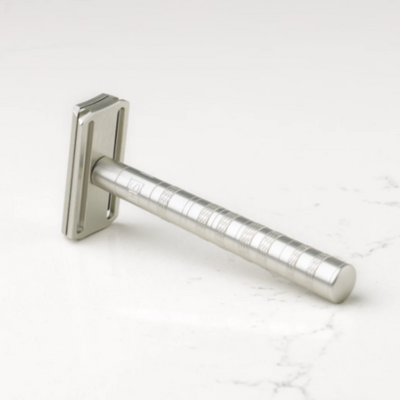
A double edge razor blade is a thin, safety razors buy online hardened steel strip with cutting edges on both long sides, designed to sit between a base plate and cap in a safety razor. The blade’s edges protrude a controlled amount - exposure - and sit over a channel - the blade gap - that clears lather and hair. Those two dimensions, combined with cap curvature and clamping point, determine how the blade behaves in your razor. An aggressive razor, with more exposure and gap, will present the edge more assertively. A milder razor will tuck it closer to the skin with more cap pressure. The same blade can feel entirely different when moved from one head to another.
Cartridge systems rely on multiple tiny blades with fixed angles and lubrication strips to compensate for imprecision. A traditional double edge razor leans on your technique and a single, truly sharp edge. That is why blade material and finish matter so much. The steel has to take a keen edge and hold it, the bevel needs a precise grind, and the surface has to glide without skipping or grabbing.
The steel beneath the shine
Most double edge razor blades are made from stainless steel because stainless resists corrosion in a wet, soapy environment. A smaller share are made from plain carbon steel, which can be honed to a very keen edge but rusts quickly if left damp. Labels like Swedish steel or surgical steel are marketing shorthand for specific stainless alloys or quality levels, but they do point to real differences in composition and processing.
Carbon steel blades, often a high carbon alloy near 1 percent carbon, can be hardened to a high Rockwell C range, commonly HRC 60 to 64, which supports a fine, aggressive edge. They feel crisp. The downside is easy oxidation. Leave one wet and you can see orange specks the next day. For some shavers with coarse beards, that risk is worth the bite these blades deliver on the first and second shave.
Stainless steel blades typically contain 12 to 14 percent chromium, sometimes with added molybdenum, vanadium, or nitrogen to tweak hardness and wear resistance. You will see terms like 13C26, 440A, or proprietary blends. After heat treatment, hardness for stainless blades usually lands in the HRC 58 to 62 range. They will not take quite as toothy an edge as the hardest carbon steels but they maintain keenness better in damp conditions and are far less likely to pit between uses.
Heat treatment is as important as the alloy. Blade stock starts as coil steel. After stamping to shape, manufacturers harden the blades through controlled heating and quenching, then temper to relieve stress. Some factories add cryogenic treatment - taking the blades down near liquid nitrogen temperatures - to transform retained austenite into martensite, stabilizing the microstructure. Done well, the process tightens carbide distribution in the steel and gives a better, more uniform edge. Done poorly, it leaves a blade that sharpens fine on day one but folds or chips early.
Grinding completes the story. A double hollow grind thins the blade toward the edge, and a multi-stage honing process polishes and sets the final bevel. The actual edge profile is typically a compound bevel - a primary mid-angle to carry strength and a tiny micro-bevel to tune sharpness and smoothness. People argue passionately over which factory gets this right, but the craft is similar everywhere: control heat at the wheel to avoid softening, minimize burr formation, and finish with the same angle on both sides so the edge tracks straight.
Here is a quick way to compare how materials feel in use.
Carbon steel - very keen out of the wrapper, lively face feel, rusts easily if not dried. Standard stainless - balanced sharpness, forgiving, holds up across several shaves with minimal maintenance. Stainless with higher molybdenum or nitrogen content - better wear resistance and corrosion resistance, often a touch smoother if paired with good coatings.
What coatings really do
When you see a tuck that reads platinum, chromium, PTFE, or titanium on the face, you are looking at surface treatments that sit atop the steel. They do not magically make a dull blade sharp, but they change how the edge meets your skin and how long it keeps that feel.
Platinum and chromium belong to a family of very thin, hard metallic coatings that reduce micro-chipping and ward off corrosion at the extreme edge. Think of them as armor at the point where the steel is thinnest. A platinum topcoat, applied by physical vapor deposition or electroplating methods, can even out small irregularities in the bevel finish and add a hair of smoothness. Chromium can do something similar and adds excellent corrosion resistance.
PTFE, often called Teflon, is a polymer coating used for glide. It lowers friction at the skin interface, which helps keep the razor from skipping across lather or tugging through dense stubble. You will sometimes notice that PTFE-coated blades feel smoother on their first pass, especially in areas where hair grows in whorls or against grain. The polymer layer is thin and wears quickly, which is why the first shave and the fourth can feel different even if the edge itself is still serviceable.
Titanium nitride and related ceramic-like layers show up occasionally in marketing. They form a very hard, gold or gray sheen that boosts wear resistance. On paper, they keep a crisp micro-bevel intact longer. In practice, your skin feels the sum of grind, steel, and all coatings. A blade with a rougher final hone and a hard coating can feel harsher than a well-finished blade with a simpler PTFE and platinum stack.
Most modern double edge razor blades use a multi-layer system. A typical stack might be a chromium or nickel underlayer for adhesion, a platinum family top layer for hardness, and a whisper-thin PTFE for glide. These layers are micrometers to nanometers thick, so you are not shaving with bulk platinum. Their purpose is functional, not ornamental.
Two side effects are worth noting. First, some blades exhibit a slightly prickly first shave, then smooth out on the second. That can be a combination of burr remnants breaking off and outer coating roughness settling with use. Second, if you chase ultimate sharpness for very coarse hair, you may prefer fewer or harder coatings to maximize bite. If your skin reacts easily, you often benefit more from a PTFE topcoat that damps chatter at the edge.
Sharpness, smoothness, and the numbers that matter
Sharpness has measurements behind it, even if most of us judge by feel. Under magnification, a razor edge is described by its radius - the curve at the very tip - and by the bevel angle. Edge radii on modern DE blades can range from roughly 20 to 200 nanometers. A smaller radius cuts with less force and feels sharper. Bevel angles vary across brands but generally live in the mid-teens per side for an inclusive angle around 30 degrees, sometimes a little lower for very sharp blades. You cannot see that with the naked eye, but you can feel it in how easily a blade slices a whisker without deflecting it.
Sharpness is not the only axis. Smoothness, which many shavers describe as comfort, involves surface friction, micro-serrations from grinding, and how rigidly the blade is clamped in the razor. A very sharp blade on a head that flexes it can feel skittish. A slightly less sharp blade on a rigid clamp can skate through stubble with fewer weepers. That is why a double edge razor blade can feel completely different in a different double edge razor. Blade feel is a system property, not an isolated number.
Another dimension is stability at the edge. Under load, the steel can either hold the micro-bevel or deform. If you have dense, thick whiskers, the edge sees real stress. An edge that looks identical at 200x magnification before the shave can round off faster on a blade with larger, more brittle carbides in the steel matrix. That rounding increases the force needed to cut, which you perceive as tugging. Coatings slow this rounding, but they cannot compensate for a weak substrate.
I track faces over data points. When a blade gives me a deep, easy first pass on the chin - the densest, flattest hairs for many men - and still feels eager on a third pass against the grain under the jaw, I know it holds its geometry under load. If it is only the cheeks that sing and the chin balks, that blade might be sharp but not stable enough for my beard.
How blades are made, briefly but usefully
Factories start with rolls of steel, slit to blade width. Stamping dies punch the familiar rectangle, safety slots, and sometimes alignment holes. Harden and temper cycles set the baseline hardness. Edges are then ground and honed on high-speed wheels with coolant to manage heat. Manufacturing lines use multiple stations to create the primary bevel and then a finer, shallower micro-bevel. The goal is consistent angle and minimal burrs.
After grinding, blades are cleaned ultrasonically, then coated in vacuum chambers or plating baths, depending on the layer. PTFE is often applied as a very thin spray or dip followed by curing. Blades dry, pass through inspection, and stack into tucks with light oil or a protective paper. Small changes at any stage change the face feel. A wheel that loads with steel swarf can leave striations that translate into micro-serrations. An overlong temper can drop hardness by a point and increase rounding between shaves. That is why lot-to-lot variation exists. Good factories keep it to a minimum with real process control.
Matching blade, razor, and beard
The right blade in the wrong razor is still the wrong setup. Think of it as pairing tires to a chassis. Blade rigidity is not only a function of thickness - most DE blades hover around 0.09 to 0.1 millimeters - but also how the razor clamps. Razors that secure the blade close to the cutting edge, or that use thicker caps with less span, reduce chatter. That allows you to run a slightly sharper blade without the edge feeling twitchy.
Mild razors with low exposure let you take advantage of sharper blades if your technique is gentle. Aggressive razors reward smoother blades, especially if your skin is sensitive. With a very coarse beard, you may need a blade that bites a bit more to prevent pushing hair below the skin line, which can lead to ingrowns when the hair rebounds. If your hair is fine but your skin reactive, your priority shifts to a low friction edge and a razor that masks exposure slightly.
Examples help. In my rotation, a very sharp stainless blade with a platinum and PTFE stack feels excellent in a mild, rigid head that hugs the blade. The same blade in a high exposure razor feels too lively. A middle-of-the-road stainless blade, not the sharpest but well coated, often feels perfect in that more open razor. That differential lets you build a small, capable kit rather than chasing a mythical one-blade-for-all setup.
How long a blade lasts and how to treat it
Realistic lifespan for most double edge razor blades is three to seven shaves, depending on beard coarseness, technique, and water. Some get more, some tap out sooner. My coarse chin hair retires many blades after the fourth shave because tugging shows up at the start of the first pass. A friend with light growth gets a week with the same tuck. If you measure by closeness rather than comfort, you may stretch to five or six, but you will often pay with redness.
Water hardness matters because mineral deposits accumulate on the edge and add drag. If you live with hard water, a quick rinse in hot water, then a dip in isopropyl alcohol can displace water from the steel and speed drying. Pat, do not wipe. Wiping along the edge risks rolling the micro-bevel. Carbon steel blades demand more care. Open the razor, remove the blade, and dry it between shaves. A thin film of mineral oil can help if you plan to leave it a few days.
You may hear about corking or stropping on denim to smooth a harsh edge. That can knock off residual burrs and take the bite out of a blade that feels grabby on the first shave. The risk is overdoing it and dulling the micro-bevel. If you try it, use a light touch, two or three very gentle draws, and stop if you notice declining performance.
Price and value
One of the joys of double edge razor blades is their cost. Even premium options are usually between 15 and 40 cents per blade when bought by the hundred. Budget blades dip under 10 cents. At three to five shaves per blade, you are looking at a few dollars per month even with daily shaving. There are exceptions - boutique or vintage stock can run higher - but the general rule holds. Since cost is low, it makes sense to test several brands and keep two standbys on hand: one sharper, one smoother.
Do not equate price with performance. Several highly regarded blades sit squarely in the middle of the price band. Packaging and distribution often explain as much of the cost as metallurgy. Private labels also exist, where the same factory makes similar blades for multiple brands with small tweaks in coatings or QC targets.
Myths that refuse to die
Sharper is not always better. The right level of sharpness is the minimum that clears your whiskers cleanly at your chosen number of passes without leaving heat behind. If you finish every shave with lingering sting even with perfect prep, try a slightly smoother blade in the same safety razor before you blame your technique.
Platinum does not mean luxury. It often means a standard hard topcoat that many factories use. You can have a platinum-labeled blade that feels harsh if the underlying hone is coarse. Conversely, a simpler stainless blade with PTFE only can feel like velvet if the grind is clean.
Stainless never rusts is not quite accurate. It resists rust, but edge sites can still stain or discolor if left wet and soapy. That is especially true where coatings wear off at the bevel.
All blades from the same plant are identical is also not correct. Factories run different lines, different coating recipes, and different QC specs for different brands. Some batches do feel similar - I have shaved through tucks that seemed like cousins - but do not assume equivalence just because the cardboard looks alike.
A practical way to compare blades
Here is a simple protocol that avoids guessing after a single pass.
Use the same razor, soap, brush, prep, and number of passes for each test blade to control variables. Give each blade at least two shaves before judging, since some smooth out after the first. Track three zones separately: cheeks for glide, chin for bite under load, and neck for irritation. Note alum feedback or post-shave sting, not just closeness, since comfort predicts long-term success. Retest a top candidate in a second razor, mild or aggressive, to see if it is versatile across setups.
I keep a small notebook for this. It sounds fussy, but after a few weeks you will see patterns that let you buy in bulk with confidence.
Safety and disposal
Double edge razors make it easy to handle the blade by the short edges, but treat that edge as a scalpel anyway. When a blade is done, do not toss it loose in the trash. Use a blade bank - a simple tin with a slot - or drop spent blades into an empty steel can with a taped slot in the lid. When it fills, crimp the top and recycle according to your local rules. Many metal recyclers accept sealed containers with used razor blades because the contents are steel and safely contained.
Edge cases and special situations
Travel complicates things. You cannot carry razor blades through airport security in most countries. If you travel with a double edge razor, pack blades in checked luggage or plan to buy tucks at your destination. Humidity on the road can be rough on carbon steel, so stainless with PTFE is a safer bet.
If you maintain a beard or stubble and only shave the neck and cheeks, you can be more flexible with blade choice. Those areas often have less dense hair, and a smoother blade can keep the delicate neck area calm. For head shaving, scalp skin varies widely. Many head shavers prefer very smooth blades in rigid razors to minimize nicks on the crown where the angle can get awkward.
Sensitive skin and coarse hair is the toughest combination. The tendency is to reach for the sharpest blade to avoid tugging, but that can lead to micro-abrasions. Instead, consider a moderately sharp stainless blade with a PTFE coating, used in a razor with firm clamping. Focus on light pressure and shallower angles. The blade should cut because it is keen, not because you are pushing.
How a small change can fix a problem
One winter I could not get a comfortable shave on the neck no matter what I tried. The blade felt fine on the cheeks, but every pass under the jawline ended with red speckles. I rotated soaps, tweaked prep, and even blamed the heater for drying the air. The fix came from swapping the blade, not the razor. I moved from a very sharp stainless with a hard coating to a slightly less sharp stainless with a PTFE layer. The first pass felt a little less dramatic, but the neck calmed down immediately. The beard still came off cleanly in three passes. That experience nudged me to keep two blades in the drawer and match them to the day instead of believing one blade would always be best.
Choosing your first few blades
If you are just getting started with a double edge razor, skip the mega sampler with a dozen tucks. Too many variables cloud what your skin is telling you. Pick three blades that represent different ends of the spectrum: a very sharp stainless with platinum and PTFE, a medium sharp stainless labeled smooth or comfort, and a carbon steel option if you are curious and willing to dry carefully. Shave two weeks with each. Use a mild to medium razor so you learn without punishment. You will likely find one that simply feels better, with fewer tiny nicks and a cleaner finish on the chin. Buy a hundred of that one. Keep a second type around for days when your skin needs a softer touch.
The role of the razor head
Finally, remember that blade choice interacts with razor head design in non-obvious ways. Safety razors with scalloped caps, different guard types, or asymmetric clamps apply different pressure distributions along the blade. Some modern designs prioritize rigidity near the edge, which benefits very sharp blades. Vintage razors often aim for a gentle, forgiving face feel that pairs well with medium sharp, well coated stainless blades. If you switch razors and a trusted blade suddenly disappoints, try its counterpart - sharp to smoother or smoother to sharper - before you decide the head is not for you.
Bringing it together
Double edge razor blades live at the intersection of materials science and surface feel. Carbon steel promises bite but demands care. Stainless brings balance and durability. Coatings add glide and protect the micro-bevel, but they cannot rescue a poor grind. Sharpness lives in nanometers, yet you evaluate it by the quietness of a pass under the jaw at 6 a.m. The right blade, in the right double edge razor, connected to the right hand, turns a chore into a small daily craft.
Treat blade choice as a controlled experiment rather than a guessing game. Listen to what your skin says about comfort, what your whiskers say about efficiency, and what your calendar says about maintenance. With that mindset, a few tucks become a lifetime of easy shaves for the price of coffee, and the little piece of steel between your cap and base plate becomes a tool you know rather than a mystery you chase.