Customized Dementia Care Plans: The Advantage of Little Senior Houses
Business Name: BeeHive Homes of Clovis
Address: 2305 N Norris St, Clovis, NM 88101
Phone: (505) 591-7025
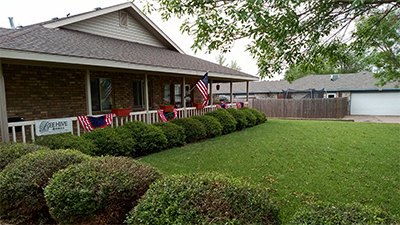
BeeHive Homes of Clovis
Beehive Homes of Clovis assisted living care is ideal for those who value their independence but require help with some of the activities of daily living. Residents enjoy 24-hour support, private bedrooms with baths, medication monitoring, home-cooked meals, housekeeping and laundry services, social activities and outings, and daily physical and mental exercise opportunities. Beehive Homes memory care services accommodates the growing number of seniors affected by memory loss and dementia. Beehive Homes offers respite (short-term) care for your loved one should the need arise. Whether help is needed after a surgery or illness, for vacation coverage, or just a break from the routine, respite care provides you peace of mind for any length of stay.
View on Google Maps
2305 N Norris St, Clovis, NM 88101
Business Hours
- Monday thru Sunday: 9:00am to 5:00pm
Follow Us:
- TikTok: https://tiktok.com/@beehivehomes_clovis
- YouTube: https://www.youtube.com/@WelcomeHomeBeeHiveHomes
- Facebook: https://www.facebook.com/beehiveclovis
-
Instagram: https://www.instagram.com/beehivehomesclovis/
🤖 Explore this content with AI:
💬 ChatGPT 🔍 Perplexity 🤖 Claude 🔮 Google AI Mode 🐦 Grok
Families hardly ever start looking into dementia care on a peaceful, relaxed afternoon. Typically it follows a crisis, or a slow build of worry that lastly topple: medication mistakes, wandering, nighttime falls, angry outbursts that do not seem like the individual you enjoy.
By the time you sit down to weigh assisted living options, checked out pamphlets about memory care, or rate out respite care, you are typically tired and not sure whom to trust. What most households sense, even if they do not have the words yet, is that dementia care has to be far more than guidance and medication. It needs to be personal, deeply so.
Small senior houses, sometimes called residential care homes or board-and-care homes, are uniquely placed to offer that sort of tailored care. They are not the right answer for every circumstance, however when they fit, they can entirely alter the trajectory for an individual coping with dementia and for their family.
This is not theory. It is the pattern I have seen consistently throughout years of working with families, clinicians, and operators of both large and little senior care settings.
Why personalization is the core of dementia care
Dementia is not one disease, and it is absolutely not one experience. A person with early Lewy body dementia who still reads the newspaper and walks a mile daily has different requirements from somebody in late-stage Alzheimer's who is bedbound and mainly nonverbal. Even within the same medical diagnosis and stage, personality, history, worths, and culture shape how signs show up and how care needs to respond.
Standardized care strategies tend to concentrate on tasks: bathing, dressing, medication administration, meals, fall safety measures. Those are essential, and any accountable assisted living or memory care program needs to cover them. But families quickly see when the plan on paper does not match the person they love.
The distinction between a task-oriented plan and a genuinely customized dementia care plan often boils down to three concerns:
Does this plan show what matters most to this specific person, not just what is convenient for the staff? Does the environment actually support the plan, or does it battle versus it every day? Do the exact same people perform the strategy consistently enough to notice small changes early?
Small senior houses are structured in such a way that makes yes more likely for each of these questions.
What specifies a little senior residence
There are different regulatory labels depending on the state or nation, but when experts talk about little senior houses, they usually indicate homes with somewhere in between 4 and 16 residents. Lots of are actually homes that have actually been adapted to meet safety and accessibility requirements.
Compare that to a conventional assisted living or memory care community, where resident counts typically vary from 60 to more than 150, sometimes spread out across multiple floorings or buildings. Those larger communities can offer features that smaller homes can not, like roomy therapy health clubs, activity calendars that fill a printed booklet, or on site salons.
Small homes trade scale senior care for intimacy. Common functions include:
A single cooking area where staff cook for everyone, not a commercial dining room. Shared living spaces that look more like a household home than a hotel lobby. Direct access to a backyard or patio area without elevators or long corridors. Staff who turn amongst just a handful of citizens, not dozens.
That architecture and staffing pattern is not a cosmetic detail. It is the foundation that makes highly individualized dementia care useful rather than aspirational.
How little scale changes dementia care in practice
In a big memory care unit, each caregiver might be responsible for 8 to 12 citizens on a common shift, in some cases more. Throughout peak times like morning care, this can climb higher. Staff have to move rapidly, and routines often end up being standardized to survive the workload.
In a little senior home, ratios are frequently closer to 1 personnel for 3 to 5 residents during the day, often even better in specialized dementia homes. The absolute numbers vary, however 2 things usually follow:
First, caretakers know each resident at a granular level. Not just medical diagnoses and allergic reactions, however the way Mr. Alvarez glances at the door when he is overwhelmed, or how Ms. Chen's cravings dips three days before she develops a urinary infection. Recognizing those subtle patterns is typically what prevents emergency room visits or significant behavioral crises.
Second, there suffices versatility to in fact enact a tailored plan, not just write one. If someone with dementia wakes for the day at 5:30 a.m. And feels most calm in the morning, a little home can typically change personnel routines so that she can shower and eat when she is at her best, instead of insisting she wait till standardized breakfast at 8 a.m.
I saw this play out clearly with a retired firefighter who moved into a six bed house after stopping working in a much larger assisted living neighborhood. In the larger setting, he paced hallways at night, attempted to open exit doors, and consistently set off alarms, which understandably distressed other citizens. Personnel labeled him "exit looking for" and "sundowning," and his family was informed he might require a locked psychiatric unit.
In the little home, the manager sat down with his child and asked comprehensive questions about his work history and routines. Within 2 weeks they had actually shifted his entire schedule. He took an early night walk around the fenced backyard with a caretaker, looked through old firehouse pictures after dinner, and was allowed to assist evaluate the smoke alarm month-to-month with monitored assistance. His roaming reduced sharply with no brand-new medication. The underlying requirement, not just the behavior, was lastly being addressed.
Tailored care plans: more than a file in the chart
A real dementia care strategy in a small home is both scientific and individual. It is not just a checklist of "assist with shower" and "advise to use walker." It weaves together safety, medical truths, emotional requirements, and meaningful activity.
Several components tend to be more powerful in little homes that focus on personalized memory care.
Deep biography and preferences
In a big neighborhood, "getting to know you" typically happens through one intake meeting and a few standardized types. Staff turnover can indicate that whoever works with your parent next month never hears the stories you shared.
In a little home, the intake procedure can extend over several conversations, often with the manager or owner present. I have seen supervisors ask households to generate old picture albums, cookbooks, or a preferred fishing rod well before relocation in, not as decor, but to build a profile of what premises the person. That biography then notifies:
Preferred everyday schedule, from waking times to peaceful hours. Language or dialect use, particularly in multilingual households. Religious or spiritual practices that offer comfort. Food choices, consisting of textures or scents that activate memories.
When the night caregiver knows that the guy with dementia hoping quietly at 2 a.m. As soon as led services at his church, she will react in a different way than if she sees just a restless resident who needs to be redirected back to bed.
Behavior deemed interaction, not misbehavior
Challenging habits in dementia, like aggressiveness, refusal of care, or shouting, usually have a cause, even if the person can not discuss it in words. Pain, worry, overstimulation, infection, irregularity, and sorrow are all regular culprits.
In crowded settings, staff under time pressure may default to short-term fixes: antipsychotics for agitation, sedatives for sleeping disorders, or stiff constraint of movement. There are times when those tools are proper, but they often move too rapidly to the front of the line.
Small senior residences, when well run, can take a more investigator like method. I have actually watched teams evaluate a week's worth of notes to see if a resident's verbal outbursts always followed loud vacuuming or accompanied a new medication. Once determined, the trigger could be removed or reduced, typically reducing distress without heavy sedation.
The tight staff team is essential here. When the same three caregivers handle morning care day after day, they can compare impressions and capture patterns that a rotating cast of dozens may miss.
Flexible routines, consistent anchors
Dementia care needs both flexibility and predictability. The flexibility to adjust to modifications in ability and mood. The predictability to offer a consistent rhythm that reduces anxiety.
Small homes support this mix through brief communication lines and a simple environment. If a resident's mobility declines and he can no longer safely use the bathtub, the care strategy can be altered quickly, and the actual bathing environment modified within days. There is no requirement to wait for approvals from several layers of corporate leadership.
Anchors like shared mealtimes, daily walks in the garden, or a standing 3 p.m. Music time can stay constant even as the information shift. Gradually those anchors become part of the resident's internal map of safety.
Comparing little homes to larger assisted living and memory care communities
Families typically ask whether they ought to look first at a standard assisted living or memory care neighborhood, or whether a little residence is better suited. There is no single right response. The better question is: offered the specific requirements, character, and budget plan involved, which environment supports a customized plan more effectively?
Below is a focused contrast of common differences.
Staffing and relationships
Little houses usually use closer staff-resident ratios and more connection. Caregivers in a 10 bed home may understand every resident's member of the family by name. Bigger neighborhoods in some cases have problem with turnover and rotating projects, which can affect how well staff know individual histories.
Environment and stimulation
A little house-like setting tends to be calmer and simpler to navigate for individuals with dementia, which reduces confusion and fall threat. Bigger buildings can supply more structured group activities and specialized areas, but they can likewise overwhelm homeowners who are delicate to sound or crowds.
Clinical resources and amenities
Larger assisted living or memory care properties may have more on website services like therapy spaces, checking out experts, or formal activity departments. Little homes typically count on checking out service providers and smaller sized scale activities, which can be extremely personal, but might feel minimal if a resident flourishes on variety.
Cost structure and transparency
Rates differs extensively, however small homes often use a reasonably basic all inclusive daily or monthly rate with add ons just for extremely specific needs. Big communities in some cases use tiered pricing that can escalate over time as needs increase. Neither model is inherently better; what matters is how foreseeable and clear the costs are for your family.
When dementia care requirements are moderate to advanced, the relationship-driven environment of a little home can surpass the missing extras. For more independent senior citizens who still delight in large celebrations and a large variety of amenities, a larger assisted living neighborhood might be a much better match initially, with the alternative to shift later.
The special role of respite care in little homes
Respite care is brief term residential care that gives household caretakers a break while providing safe, structured assistance for the individual with dementia. In practice, little senior homes frequently act as a perfect setting for respite, specifically in early and middle stages.
Several advantages stand out.
First, the home like atmosphere tends to be less daunting for someone who has actually always lived in single household houses or studio apartments. Walking into a 120 unit building with an official reception desk can activate stress and anxiety for a person with cognitive impairment, while stepping into a living-room with a sofa and a familiar smelling kitchen can feel more natural.
Second, staff can more quickly integrate a short-term guest into every day life. In a ten resident home, including one respite guest means everyone is familiar with that person within a day or 2. Caregivers discover quickly whether he chooses morning coffee on the porch or a quiet space to read, and can fold those preferences into the short-term care plan.
Third, respite stays can work as a mild trial run for longer term memory care or assisted living choices. Families can see whether their loved one settles well in a common environment, whether they respond to social meals, and how they make with personnel supported regimens. If a relocation eventually ends up being necessary, familiarity with a little residence can reduce the injury of relocation.
I often suggest households utilize respite tactically, not just throughout crises. A prepared a couple of week stay every few months can provide primary caretakers sustainable rest while also constructing a relationship with a home that might one day end up being a more irreversible solution.
Clinical and emotional outcomes in smaller sized settings
Research on small scale dementia care environments, including "Green House" design homes and other home models, has found a constant pattern: locals tend to experience fewer hospitalizations, more steady weight, and higher household fulfillment compared to standard institutional layouts. Not every little residence fits those designs or matches those outcomes, however the underlying principles still matter.
On the medical side, earlier detection of modification is the key. When a caretaker helps the exact same individual to dress every early morning, she is placed to discover that swelling in the ankles started three days ago, or that breathing sounds discreetly tighter. That can prompt a timely call to a checking out nurse professional before the problem ends up being a complete blown emergency.
Medication management also benefits. With fewer locals to track, personnel can pay closer attention to side effects like increased falls after a new sedative is presented, or emerging tremblings after an antipsychotic dosage modifications. In an overloaded setting, those modifications might be credited to "dementia progression" instead of being flagged as potentially reversible.
Emotionally, citizens in little homes typically maintain more powerful sense of belonging. They recognize staff and other residents as "their individuals" instead of as an ever changing crowd. Even individuals in sophisticated dementia who can no longer name caregivers correctly will show noticeable relaxation when greeted by the exact same familiar faces each day.
Family fulfillment is seldom about chandeliers or activity calendars. It is mostly about trust and access. In small homes, families can generally reach a decision maker quickly by phone or text. Many homes encourage informal visits at diverse hours, not just in a narrow visiting window. That openness promotes collaborative problem resolving when hard choices arise, such as whether to pursue hospitalization for pneumonia or deal with in place.
When a little home may not be the best fit
No design is best. Little senior houses have restrictions, and it would be irresponsible to overlook them.
Some homes lack 24/7 nursing coverage, relying rather on caregivers and on call nurses or physicians. For an individual with really intricate medical needs, such as frequent IV medications, unsteady heart rhythms, or advanced breathing disease needing constant monitoring, a setting with on site licensed nursing all the time might be safer.
Regulatory oversight can likewise vary. In some regions, requirements for small homes are robust and well implemented. In others, guidelines may be looser than those for big assisted living or memory care service providers. Households need to ask pointed concerns and validate licensing, assessment history, and staff training, instead of presuming intimacy always equals quality.
Financially, little homes can be either basically pricey than bigger neighborhoods, depending on local markets and the intensity of care needed. While some deal excellent value, others may charge premium rates showing the high staffing ratios. Sustainable financing is a useful restraint for numerous households, particularly when dementia care may stretch over lots of years.
Finally, specific personalities really delight in the buzz and variety of a bigger environment. A retired instructor who thrives on leading groups and satisfying new people may feel constrained in a tiny home if the majority of other citizens are quieter or more impaired. Matching character is as essential as matching medical needs.
How to evaluate a little senior residence for dementia care
Families touring little residences typically feel simultaneously enthusiastic and careful. The home feels more human than a big center, but you may wonder how to inform whether the memory care offered is really as tailored as it sounds in the brochure.
A concise list can assist focus your visit and conversations.
Observe real interactions, not simply staged tours
See how staff talk with locals when they are not "on screen." Do they use names, make eye contact, and respond to nonverbal cues? Ask if you can visit during a regular moment like breakfast or night preparation instead of just at mid afternoon "activity time."
Ask about staff stability and training
Request specific numbers: typical length of work for caregivers, turnover in the past year, and the type of dementia particular training provided. A home where most personnel have been there several years, and where training consists of genuine case conversations, is much better positioned to deliver constant dementia care.
Review how care plans are produced and updated
Ask who leads the assessment, how typically care strategies are modified, and how households are included. Look for proof of regular evaluations activated by modifications in capability, not just by yearly schedules. Request an anonymized example care strategy to see how in-depth and person focused it truly is.
Clarify medical assistance and emergency situation protocols
Discover which clinicians visit the home, how often, and what takes place during an acute modification. Can the home manage moderate pneumonia or a urinary infection onsite, or is hospitalization constantly required? Clear, reasonable responses signal experience and honesty.
Understand rates and "what if" scenarios
Have the supervisor walk you through the contract utilizing concrete examples. If your mother begins to need 2 individual transfers, or develops nighttime roaming, how will those changes affect cost and staffing? Surprises are far less most likely when these circumstances are gone over before move in.
Taking notes throughout and after each visit helps. You may not remember whether it was the second or third home where a caregiver knelt down to speak eye to eye with a resident who was distressed, or where a team member cut food attentively for a man with trembling. Those small minutes inform you more about the culture of care than any sleek marketing sheet.
Integrating household into the care partnership
Tailored dementia care does not press households to the sidelines; it brings them into the center as partners. Little houses frequently have an advantage here due to the fact that interaction lines are much shorter and hierarchies flatter.
Family members can share insights about triggers, relaxing rituals, or deeply held worths that only years of relationship reveal. For example, understanding that your father constantly reacted badly to being hurried, even long before dementia, assists personnel take a slower, more step-by-step method to bathing or dressing.
On the opposite, staff in a little home can update families quickly on subtle changes that might not emerge in monthly care conferences. A brief text saying, "Your mom really illuminated when we played 1960s Motown today," may prompt you to generate favorite records or images from that era. Those exchanges slowly improve the care plan.
Honest conversations about decrease and end of life are simpler in this sort of collaboration. When you rely on the people who spend every day with your loved one, you are better able to weigh options like hospice registration, comfort focused medication changes, or a choice to deal with infections in the house instead of with repeated hospitalizations. The outcome is typically a more serene, meaningful final chapter.
Bringing everything together for your family
Dementia care is as much about context as it has to do with medical truths. The same person can stop working in one environment and thrive in another, with no modification in diagnosis. Small senior homes offer a context where customized care plans are not an afterthought but the natural method of doing things.
They supply:
A scale that supports deep knowing of each resident. A home like environment that lowers confusion and fosters calm. The versatility to alter routines quickly as dementia evolves. The intimacy to make family collaboration feel natural, not bureaucratic.
They are not the only path. Some individuals will do better in bigger assisted living or specialized memory care neighborhoods, especially in early stages or when they yearn for a broad social media. Others may remain in the house longer with strong in home supports and periodic respite care.
What matters is aligning setting, care plan, and individual. When you evaluate alternatives, listen not just to what companies assure, however to what you observe gradually: tone of voice, body language, responsiveness to little demands, determination to adapt.
If you walk into a small senior home and see staff utilizing the individual's preferred label, honoring long held routines, and changing the plan in genuine time rather than firmly insisting "this is how we do things here," you are most likely standing in a place where customized dementia care is not a motto but a day-to-day practice. That sort of environment can make the hardest parts of this journey feel more bearable, for both the person coping with dementia and the household who enjoys them.
BeeHive Homes of Clovis provides assisted living care
BeeHive Homes of Clovis provides memory care services
BeeHive Homes of Clovis provides respite care services
BeeHive Homes of Clovis supports assistance with bathing and grooming
BeeHive Homes of Clovis offers private bedrooms with private bathrooms
BeeHive Homes of Clovis provides medication monitoring and documentation
BeeHive Homes of Clovis serves dietitian-approved meals
BeeHive Homes of Clovis provides housekeeping services
BeeHive Homes of Clovis provides laundry services
BeeHive Homes of Clovis offers community dining and social engagement activities
BeeHive Homes of Clovis features life enrichment activities
BeeHive Homes of Clovis supports personal care assistance during meals and daily routines
BeeHive Homes of Clovis promotes frequent physical and mental exercise opportunities
BeeHive Homes of Clovis provides a home-like residential environment
BeeHive Homes of Clovis creates customized care plans as residents’ needs change
BeeHive Homes of Clovis assesses individual resident care needs
BeeHive Homes of Clovis accepts private pay and long-term care insurance
BeeHive Homes of Clovis assists qualified veterans with Aid and Attendance benefits
BeeHive Homes of Clovis encourages meaningful resident-to-staff relationships
BeeHive Homes of Clovis delivers compassionate, attentive senior care focused on dignity and comfort
BeeHive Homes of Clovis has a phone number of (505) 591-7025
BeeHive Homes of Clovis has an address of 2305 N Norris St, Clovis, NM 88101
BeeHive Homes of Clovis has a website https://beehivehomes.com/locations/clovis/
BeeHive Homes of Clovis has Google Maps listing https://maps.app.goo.gl/SMhM3zbKaKgR1UAX6
BeeHive Homes of Clovis has TikTok page https://tiktok.com/@beehivehomes_clovis
BeeHive Homes of Clovis has Facebook page https://www.facebook.com/beehiveclovis
BeeHive Homes of Clovis has Instagram page https://www.instagram.com/beehivehomesclovis/
BeeHive Homes of Clovis has an YouTube page https://www.youtube.com/@WelcomeHomeBeeHiveHomes
BeeHive Homes of Clovis won Top Assisted Living Homes 2025
BeeHive Homes of Clovis earned Best Customer Senior Service Award 2024
BeeHive Homes of Clovis placed 1st for Senior Living Communities 2025People Also Ask about BeeHive Homes of Clovis
What is BeeHive Homes of Clovis Living monthly room rate?
=========================================================The rate depends on the level of care that is needed. We do a pre-admission evaluation for each resident to determine the level of care needed. The monthly rate is based on this evaluation. There are no hidden costs or fees
Can residents stay in BeeHive Homes until the end of their life?
================================================================Usually yes. There are exceptions, such as when there are safety issues with the resident, or they need 24 hour skilled nursing services
Do we have a nurse on staff?
============================No, but each BeeHive Home has a consulting Nurse available 24 – 7. if nursing services are needed, a doctor can order home health to come into the home
What are BeeHive Homes’ visiting hours?
=======================================Visiting hours are adjusted to accommodate the families and the resident’s needs… just not too early or too late
Do we have couple’s rooms available?
====================================Yes, each home has rooms designed to accommodate couples. Please ask about the availability of these rooms
Where is BeeHive Homes of Clovis located?
=========================================BeeHive Homes of Clovis is conveniently located at 2305 N Norris St, Clovis, NM 88101. You can easily find directions on Google Maps or call at (505) 591-7025 Monday through Sunday 9:00am to 5:00pm
How can I contact BeeHive Homes of Clovis?
==========================================You can contact BeeHive Homes of Clovis by phone at: (505) 591-7025, visit their website at https://beehivehomes.com/locations/clovis/ or connect on social media via TikTok Facebook or YouTube
Leal's Mexican Food Restaurant provides familiar regional cuisine where residents in assisted living, memory care, senior care, elderly care, and respite care can enjoy relaxed meals.